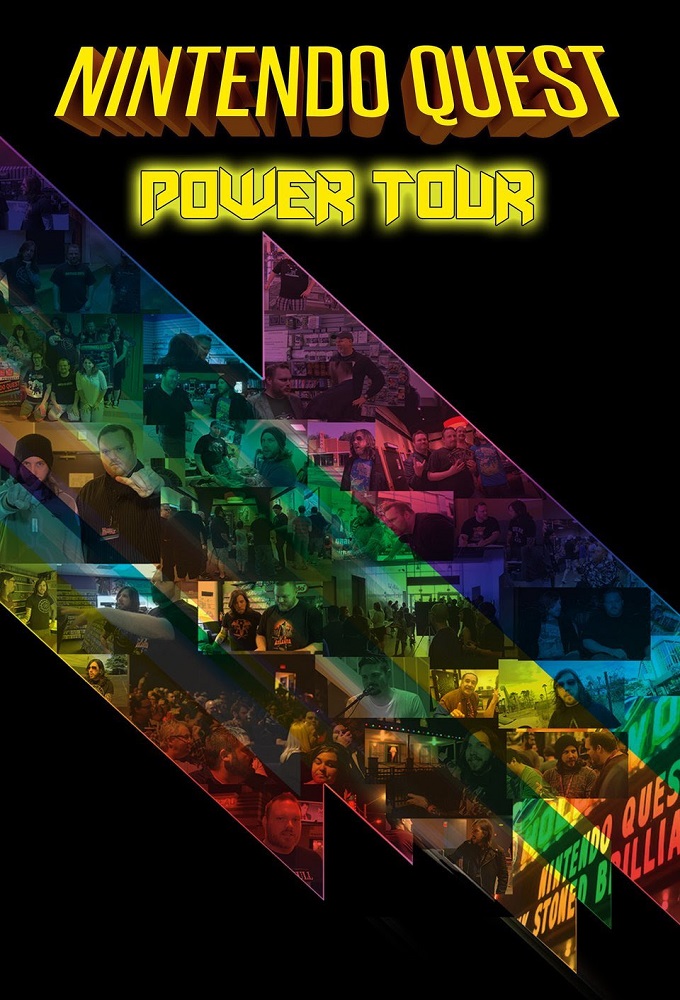
Why Watch
"Relive the golden era of retro gaming on an obsessive cross-country road trip chasing legendary NES treasures."





AI Critic Analysis
Series Deep Dive:
Building upon the cult documentary, Nintendo Quest: Power Tour follows dedicated enthusiasts scouring thrift stores and collector basements across North America. Rather than simple nostalgia bait, this docuseries delivers a grounded look at the subculture of physical media preservation. It captures the thrills, financial strain, and personal camaraderie driving retro collectors. For gaming historians and vintage tech fans, it remains an essential chronicle of gaming's enduring legacy.
Season: 1
| Watched? | # | Air Date | Episode Name |
|---|---|---|---|
| E1 | Apr 01, 2018 | Los Angeles, CA | |
| E2 | Apr 01, 2018 | Las Vegas, NV | |
| E3 | Austin, TX | ||
| E4 | Houston, TX | ||
| E5 | Columbus, OH | ||
| E6 | DuBois, PA | ||
| E7 | London, ON Canada | ||
| E8 | Portland, OR | ||
| E9 | Bonus Level |
Production Note - Limited Series
Production Type: Miniseries
Nintendo Quest: Power Tour is a standalone Miniseries designed as a completed, finite historical narrative. The production expands upon the original documentary premise by documenting a specific road trip across the United States and Canada with the goal of visiting various retro gaming stores and conventions. Because the narrative is built around a singular, time-sensitive journey with a defined list of acquisitions, the series concludes naturally once the physical tour reaches its destination.
The scale of the production focuses on the subculture of video game collecting and the personal endurance of the subjects involved. By framing the series as a finite quest rather than an ongoing reality program, the creators ensured that the story remained a focused companion piece to the original film. This structure allows the series to serve as a definitive historical record of the retro gaming landscape during its specific production window without the need for additional seasons.
If you liked Nintendo Quest: Power Tour:





Technical Details
- Network: Unknown
- Seasons: 1
- Years: 2018 - 2018
- Genre: Documentary