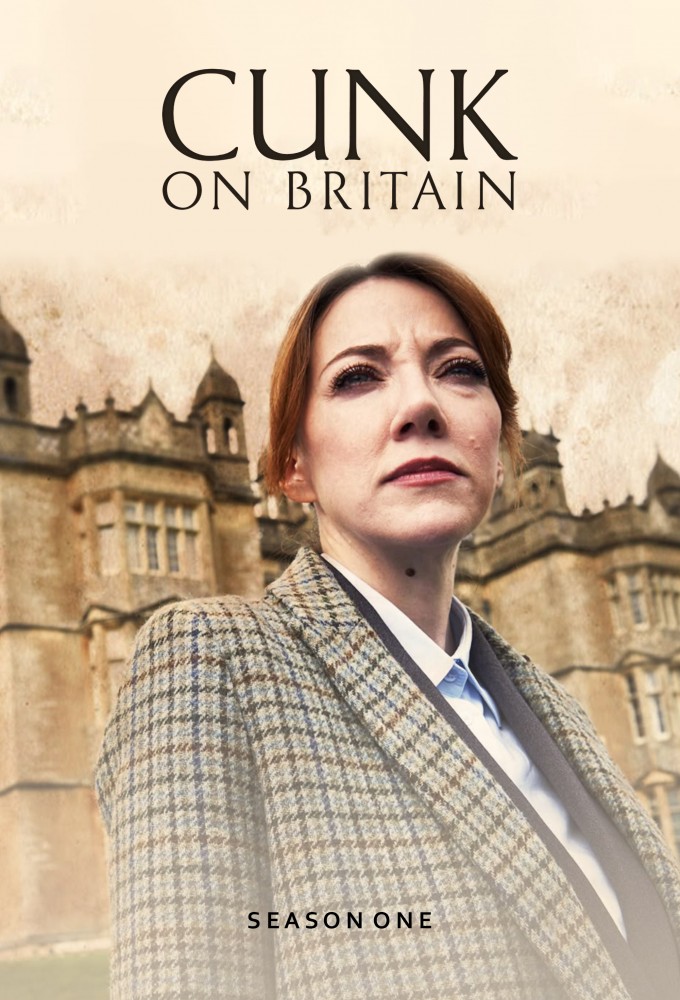

Why Watch
"Diane Morgan delivers deadpan comedic perfection, brilliantly eviscerating United Kingdom history through absurd historical inquiries and bewildered expert interviews."
AI Critic Analysis
Series Deep Dive:
Fronted by Diane Morgan's brilliantly uninformed alter ego Philomena Cunk, Cunk on Britain redefines the historical documentary format. Through relentlessly absurd queries posed to genuine, patient academics, the BBC Two comedy masterfully dismantles British exceptionalism with razor-sharp parody. Backed by Charlie Brooker's razor-edged writing team, this compact mockumentary series delivers an enduring lesson in deadpan hilarity, cementing the character as one of modern television's most sharply executed comedic creations.
Season: 1
| Watched? | # | Air Date | Episode Name |
|---|---|---|---|
| E1 | Apr 03, 2018 | Beginnings | |
| E2 | Apr 10, 2018 | The Empire Strikes Back | |
| E3 | Apr 17, 2018 | The Third Episode | |
| E4 | Apr 24, 2018 | Twentieth Century Shocks | |
| E5 | May 01, 2018 | The Arse End of History |
Production Note - Limited Series
Production Type: Miniseries
Cunk on Britain is a standalone Miniseries designed as a completed, finite historical narrative. The production was conceived as a comprehensive mockumentary survey of British history, spanning from the Big Bang to the modern era across five distinct chapters. By utilizing a high-concept satirical format, the creators intended to parody the authoritative style of academic documentaries while providing a self-contained comedic retrospective that leaves no era of the nation's past unexamined.
The scale of the production involved extensive location filming at historical landmarks and interviews with genuine subject matter experts to contrast with the protagonist's intentional ignorance. Because the narrative structure was built around a chronological progression through the entirety of the United Kingdom's history, the project reached its natural conclusion once it reached the present day. This finite design ensured the series remained a focused piece of social commentary rather than an ongoing procedural.
If you liked Cunk on Britain:








Technical Details
- Network: BBC Two
- Seasons: 1
- Years: 2018 - 2018
- Genre: Comedy, History