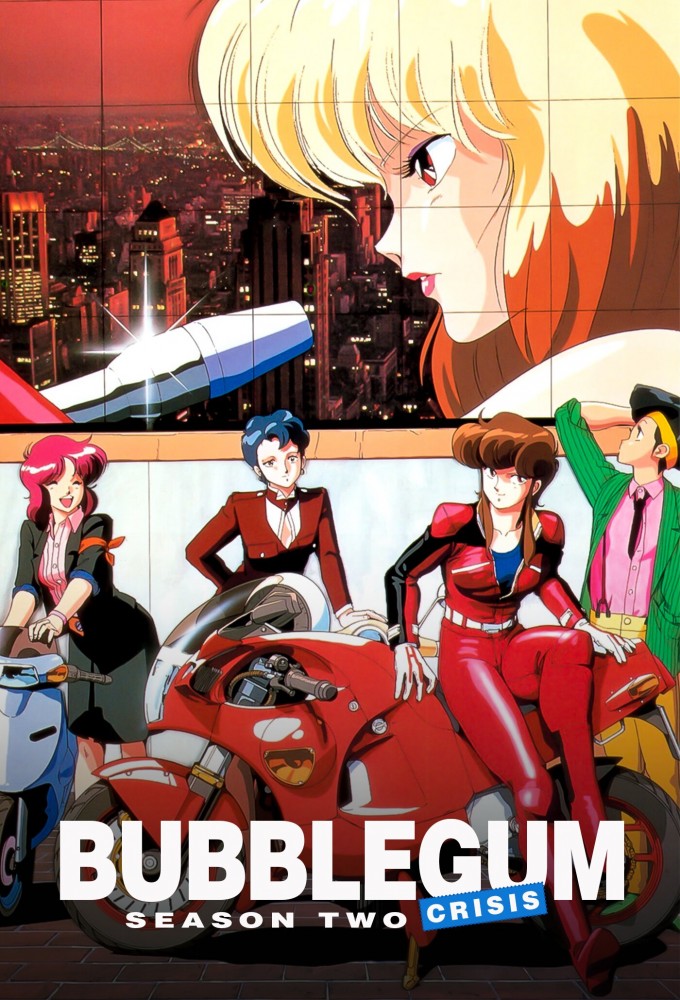
Why Watch
"Cyberpunk exosuits, lethal rogue androids, and soaring synth-rock tracks collide across neon-drenched Mega-Tokyo in this quintessential retro anime classic."
Where to Watch














 Streaming details by:
JustWatch
Streaming details by:
JustWatch
AI Critic Analysis
Series Deep Dive:
Emerging from anime's golden era, Bubblegum Crisis stands as a definitive milestone in cyberpunk animation. Following the vigilante Knight Sabers as they battle corporate greed and rogue Boomers across Mega-Tokyo, the concluded classic delivers phenomenal hand-drawn action and an unforgettable rock soundtrack. Its distinct visual identity and gritty urban edge ensure that Bubblegum Crisis remains an essential retro benchmark for sci-fi enthusiasts revisiting completed animation archives.
Season: 2
| Watched? | # | Air Date | Episode Name |
|---|---|---|---|
| E1 | May 25, 1991 | ILLEGAL ARMY | |
| E2 | Jul 25, 1991 | GEO CLIMBERS | |
| E3 | Dec 21, 1991 | MELT DOWN |
Series Legacy & Historical Archive
Franchise Status: The franchise remains a cult classic with no active productions following the 1998 Tokyo 2040 reboot and various spin-offs, though it frequently sees high-definition remasters and soundtrack re-releases.
Bubblegum Crisis remains a definitive pillar of Cyberpunk television, having concluded its influential run on OVA. The series is celebrated for its synthesis of high-tech aesthetic and hard rock energy, personifying the 1980s vision of a neon-drenched future. Its depiction of the Knight Sabers as vigilantes fighting corporate tyranny through powered armor set a standard for the mecha-girl subgenre that influenced countless successors. The show serves as a time capsule of high-budget hand-drawn animation, showcasing intricate mechanical designs and atmospheric world-building that digital methods often struggle to replicate.
As a rewatch staple, the series thrives on its episodic intensity and its iconic synthesizer-driven soundtrack which remains a high point of the era. Fans return to Mega Tokyo for its unapologetic style and the chemistry of its lead ensemble, which balances gritty noir themes with character-driven drama. Despite its unfinished original run due to legal disputes, its cultural DNA persists in the way modern science fiction explores the intersection of humanity and artificial intelligence. It remains an essential viewing experience for anyone tracking the evolution of the cyberpunk genre in global media.
If you liked Bubblegum Crisis:




Technical Details
- Network: Anime OAV
- Seasons: 2
- Years: 1987 - 1991
- Genre: Action, Adventure, Animation, Anime, Fantasy, Science Fiction, Thriller
- Rating: TV-14