
Why Watch
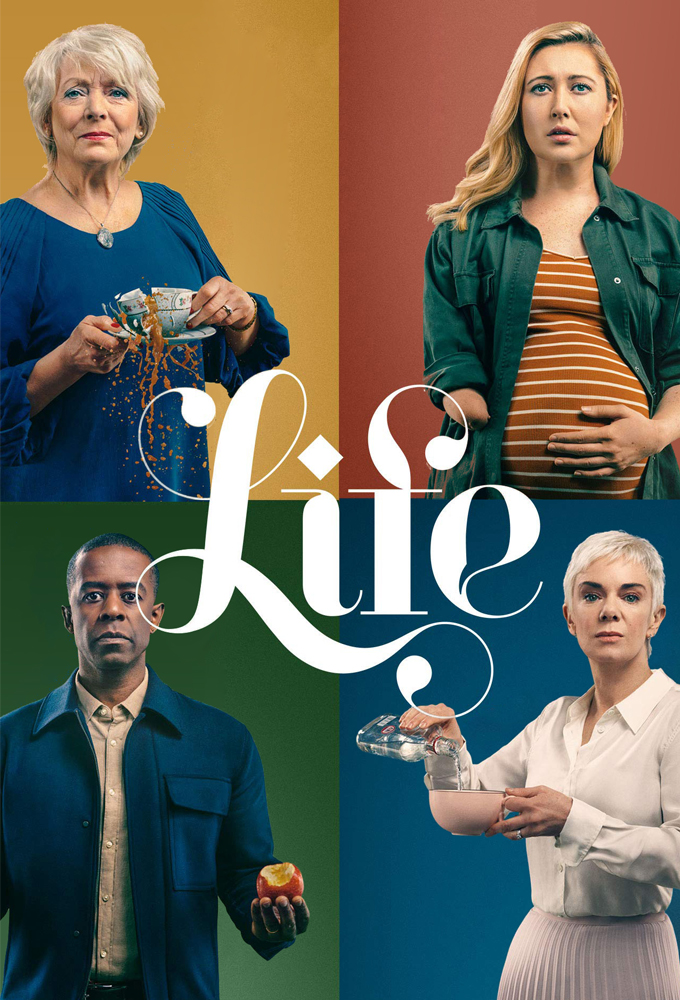
"Mike Bartlett crafts an engrossing, interwoven character study following distinct lives inside a divided Manchester Victorian house."


AI Critic Analysis
Series Deep Dive:
Spinning out from Doctor Foster, writer Mike Bartlett constructs an exceptional ensemble drama anchored by Victoria Hamilton and Alison Steadman. Set within a partitioned suburban home, Life examines isolation, rebirth, and human connection across four distinct flats. Grounded performances elevate ordinary dilemmas into riveting television, proving that quiet domestic choices often carry monumental emotional weight. It remains a masterclass in modern British relational storytelling.
Season: 1
| Watched? | # | Air Date | Episode Name |
|---|---|---|---|
| E1 | Sep 29, 2020 | Episode 1 | |
| E2 | Oct 06, 2020 | Episode 2 | |
| E3 | Oct 13, 2020 | Episode 3 | |
| E4 | Oct 20, 2020 | Episode 4 | |
| E5 | Oct 27, 2020 | Episode 5 | |
| E6 | Nov 03, 2020 | Episode 6 |
Production Note - Limited Series
Production Type: Miniseries
Life (2020) is a standalone Miniseries designed as a completed, finite historical narrative. The production was conceived as a character-driven exploration of interconnected lives within a single Manchester residence, utilizing a multi-protagonist format to examine themes of isolation and community. As a spin-off from the established world of Doctor Foster, the series was structured to provide a deep dive into the domestic realities of its ensemble cast while maintaining a self-contained arc for each resident.
The creative team intended for the six-part run to resolve the primary emotional conflicts introduced at the start of the season. By focusing on the personal growth and intersections of the four households, the narrative reached a natural conclusion that precluded the need for further seasons. This finite approach allowed the production to maintain a high level of intimacy and closure for its audience, cementing its status as a complete television event.
If you liked Life (2020):






Trailer
Technical Details
- Network: BBC One
- Seasons: 1
- Years: 2020 - 2020
- Genre: Drama, Mini-Series