
Why Watch
"Witness the dramatic birth of modern football through Victorian class warfare, industrial grit, and passionate sporting ambition."



AI Critic Analysis
Series Deep Dive:
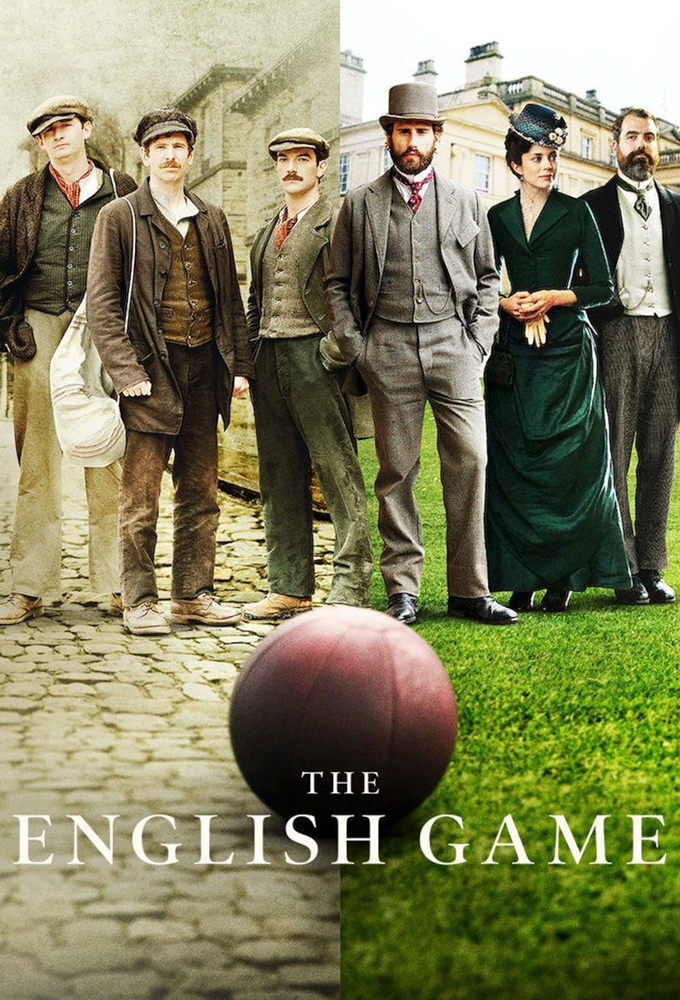
Created by Julian Fellowes, The English Game explores the fierce origins of modern football. Set against the harsh backdrop of Victorian Britain, the drama captures a pivotal cultural shift as working-class factory hands challenge aristocratic dominance on the pitch. Led by Edward Holcroft and Kevin Guthrie, this compact historical miniseries balances sports history with poignant social upheaval, delivering an engrossing, completed narrative that redefined how the world views the beautiful game.
Season: 1
| Watched? | # | Air Date | Episode Name |
|---|---|---|---|
| E1 | Mar 20, 2020 | Episode 1 | |
| E2 | Mar 20, 2020 | Episode 2 | |
| E3 | Mar 20, 2020 | Episode 3 | |
| E4 | Mar 20, 2020 | Episode 4 | |
| E5 | Mar 20, 2020 | Episode 5 | |
| E6 | Mar 20, 2020 | Episode 6 |
Production Note - Limited Series
Production Type: Limited Series
The English Game is a standalone Limited Series designed as a completed, finite historical narrative. Developed by Julian Fellowes, the production was envisioned as a six-part miniseries that explores the class-driven origins of modern football in the late 19th century. The narrative centers on the intersection of the upper-class Old Etonians and the working-class Darwen FC, specifically focusing on the historical figures of Arthur Kinnaird and Fergus Suter as they navigate the transition from amateurism to professionalism.
The series concludes with the resolution of the 1883 FA Cup Final, effectively closing the chapter on the specific historical conflict that defined the sport's early evolution. Because the scripts were written to reach this definitive milestone in the history of the Football Association, the production serves as a self-contained chronicle. There have been no discussions regarding a second season, as the creative team and Netflix intended for the story to be a singular, comprehensive look at the birth of the modern game.
If you liked The English Game:






Technical Details
- Network: Netflix
- Seasons: 1
- Years: 2020 - 2020
- Genre: Drama, History, Mini-Series, Sport