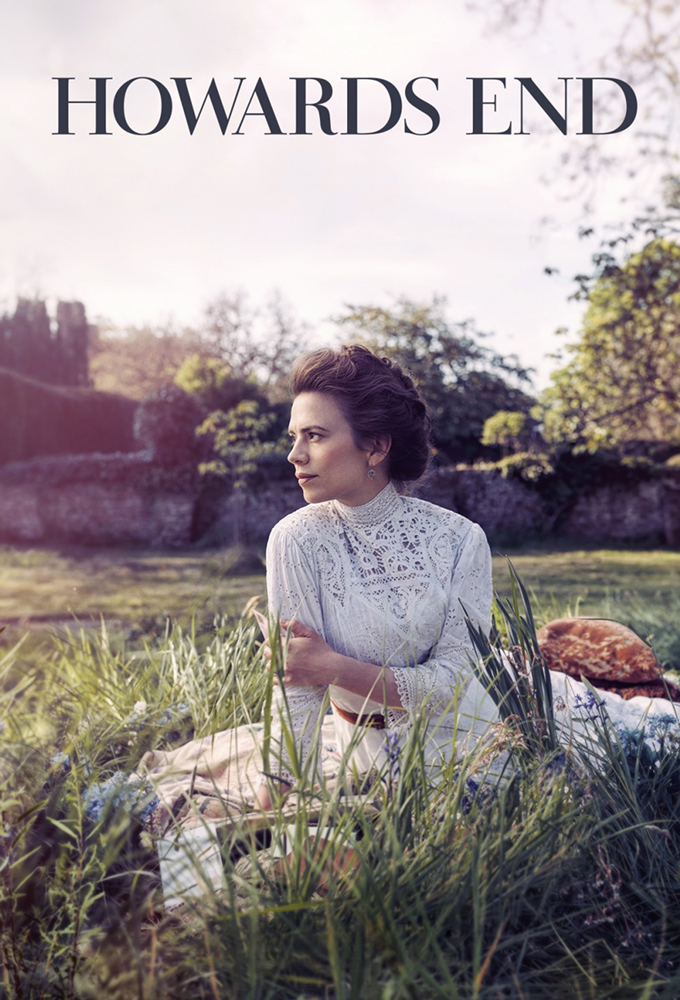

Why Watch
"Kenneth Lonergan adapts E.M. Forster's classic with sharp social insight, brilliant lead performances, and enduring historical resonance."
Where to Watch













 Streaming details by:
JustWatch
Streaming details by:
JustWatch
AI Critic Analysis
Series Deep Dive:
This four-part adaptation of E.M. Forster’s masterpiece avoids standard period complacency thanks to Kenneth Lonergan’s brisk, intelligent script. Hayley Atwell shines as Margaret Schlegel, navigating Edwardian class friction alongside Matthew Macfadyen’s rigid Henry Wilcox. Director Hettie Macdonald keeps the pace vibrant, grounding romantic idealism in stark economic realities. Howards End stands as a definitive, beautifully mounted literary miniseries that interrogates privilege with remarkable precision and modern relevance.
Season: 1
| Watched? | # | Air Date | Episode Name |
|---|---|---|---|
| E1 | Nov 12, 2017 | Episode 1 | |
| E2 | Nov 19, 2017 | Episode 2 | |
| E3 | Nov 26, 2017 | Episode 3 | |
| E4 | Dec 03, 2017 | Episode 4 |
Production Note - Limited Series
Production Type: Limited Series
Howards End is a standalone Limited Series designed as a completed, finite historical narrative. Developed as a high-prestige co-production between the BBC and Starz, the project was specifically commissioned to adapt E.M. Forster’s seminal 1910 novel into a definitive four-part television event. Unlike ongoing dramas that rely on serialized expansion, this production focused on a precise literary translation, ensuring that the complex social dynamics of the Schlegel and Wilcox families reached their natural conclusion within the allotted episodes.
The production scale reflected a commitment to historical authenticity and cinematic quality, utilizing period-accurate locations and a script by Academy Award winner Kenneth Lonergan. By structuring the series as a closed-ended narrative, the creators were able to preserve the thematic integrity of the source material without the need for additional seasons. This approach allowed the story to conclude with the resolution of the inheritance of the titular estate, fulfilling its creative mandate as a comprehensive and self-contained adaptation.
If you liked Howards End:






Technical Details
- Network: BBC One
- Seasons: 1
- Years: 2017 - 2017
- Genre: Drama, Mini-Series, Romance
- Rating: TV-PG