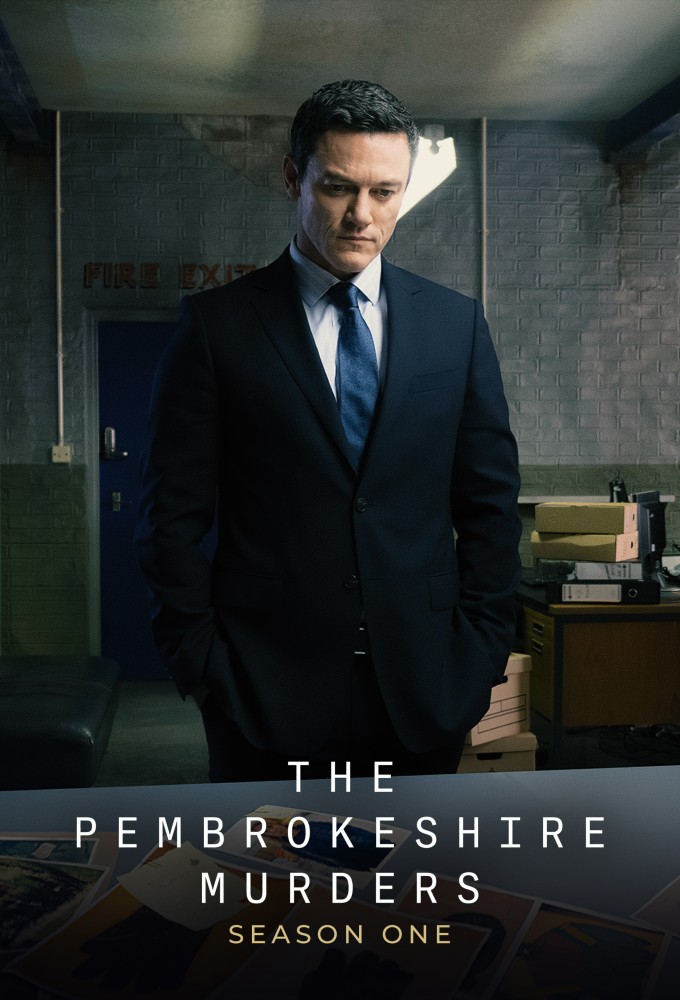

Why Watch
"Luke Evans anchors a tense, methodical true-crime hunt exposing a serial killer through revolutionary cold-case forensic science."








AI Critic Analysis
Series Deep Dive:
This taut British miniseries dramatizes the real-life reopening of two unsolved 1980s double murders. Luke Evans delivers a grounded performance as Detective Superintendent Steve Wilkins, whose team races against time before a convicted felon secures parole. Foregoing sensationalism, The Pembrokeshire Murders delivers a meticulously paced procedural driven by groundbreaking forensic breakthroughs, capturing the persistent, quiet determination of Welsh law enforcement seeking long-overdue justice for devastated families.
Season: 1
| Watched? | # | Air Date | Episode Name |
|---|---|---|---|
| E1 | Jan 11, 2021 | Episode 1 | |
| E2 | Jan 12, 2021 | Episode 2 | |
| E3 | Jan 13, 2021 | Episode 3 |
Production Note - Limited Series
Production Type: Limited Series
The Pembrokeshire Murders is a standalone Limited Series designed as a completed, finite historical narrative. This ITV production focuses on the cold case investigation led by Detective Superintendent Steve Wilkins into the 1980s double murders known as the Coastal Path murders. The scale of the production was meticulously planned to mirror the real-life Operation Ottaway, utilizing the book written by Wilkins and journalist Jonathan Hill as its primary source material. By focusing on the scientific breakthroughs in DNA profiling that eventually secured a conviction, the series was structured to reach a definitive legal and narrative conclusion.
The decision to produce the story as a three-part miniseries allowed for a focused examination of the procedural elements without the need for fictionalized expansion or multi-season arcs. Producers and writers emphasized historical accuracy and the closure provided by the 2011 trial, ensuring the project remained a self-contained dramatization of justice served. As a true-crime adaptation of a specific police operation, the series was never intended to continue beyond the resolution of the John Cooper case, cementing its status as a finite television event.
If you liked The Pembrokeshire Murders:




Technical Details
- Network: ITV1
- Seasons: 1
- Years: 2021 - 2021
- Genre: Crime, Mini-Series