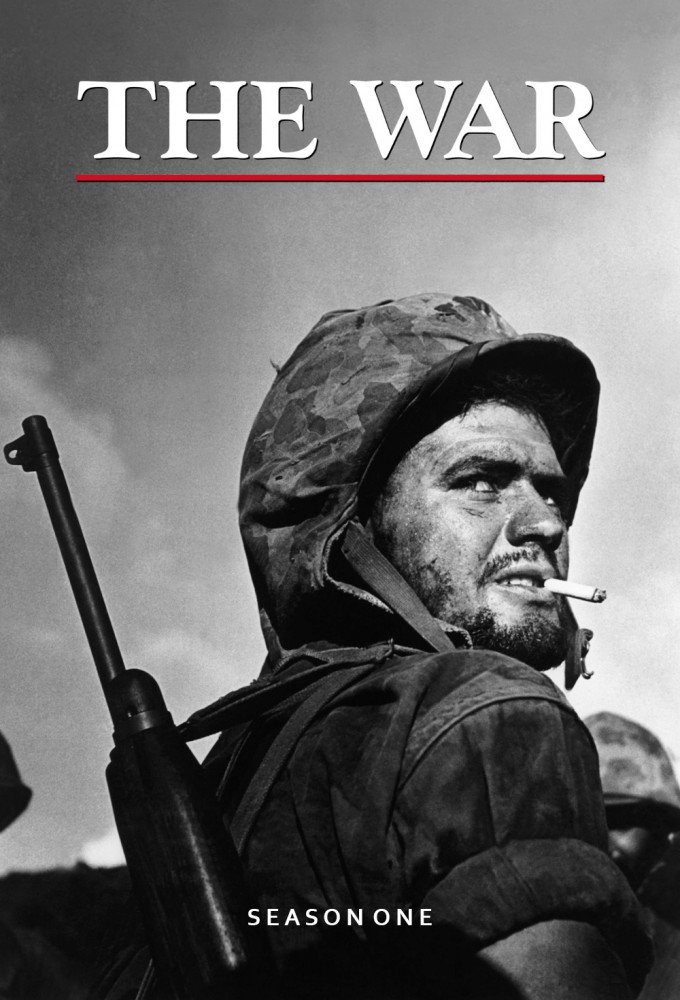

Why Watch
"Ken Burns presents an unvarnished chronicle of World War II through intensely personal accounts from four American towns."










AI Critic Analysis
Series Deep Dive:
Ken Burns and Lynn Novick deliver an exhaustive historical account in The War, focusing entirely on the lived experiences of everyday citizens across four distinct American communities. Through stark archival footage, candid personal interviews, and Keith David’s measured narration, this seminal PBS miniseries deliberately strips away standard Hollywood heroics to examine the genuine, devastating human cost of global combat both overseas and on the home front.
Season: 1
| Watched? | # | Air Date | Episode Name |
|---|---|---|---|
| E1 | Sep 23, 2007 | A Necessary War | |
| E2 | Sep 24, 2007 | When Things Get Tough | |
| E3 | Sep 25, 2007 | A Deadly Calling | |
| E4 | Sep 26, 2007 | Pride of our Nation | |
| E5 | Sep 30, 2007 | FUBAR | |
| E6 | Oct 01, 2007 | The Ghost Front | |
| E7 | Oct 02, 2007 | A World Without War |
Production Note - Limited Series
Production Type: Miniseries
The War is a standalone Miniseries designed as a completed, finite historical narrative. Produced as a comprehensive documentary event, the project was meticulously structured to cover the global conflict from 1941 to 1945 without the intent for expansion or additional seasons. The production scale involved digitizing thousands of feet of historical footage and conducting hundreds of interviews to ensure the specific personal accounts were preserved within this singular, definitive timeline.
The series serves as a closed historical record that prioritizes the intimate testimonies of veterans and their families over broad military strategy. Because the narrative concludes with the total cessation of hostilities and the return of soldiers to their respective hometowns, the story is naturally self-limiting. The creators designed the work to stand as a permanent archival achievement, ensuring that the thematic journey from the home front to the battlefield remains a complete and self-contained experience for the viewer.
If you liked The War:





Technical Details
- Network: PBS
- Seasons: 1
- Years: 2007 - 2007
- Genre: Documentary, History, War
- Rating: TV-14