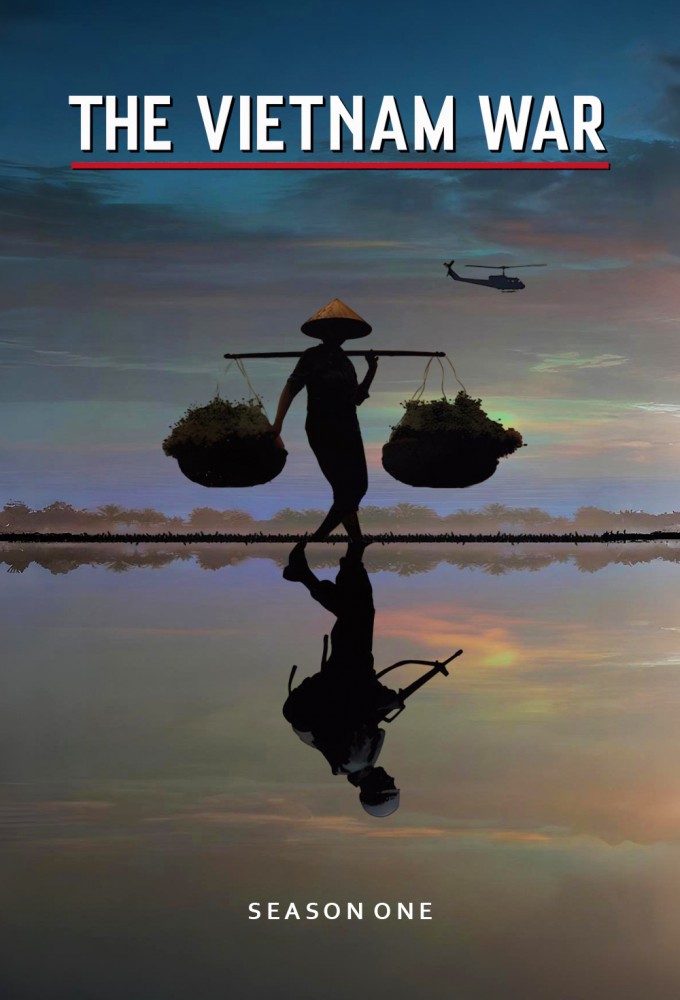

Why Watch
"Ken Burns delivers an unflinching, masterfully balanced historical record of a catastrophic conflict through intimate, deeply human voices."







AI Critic Analysis
Series Deep Dive:
Directors Ken Burns and Lynn Novick present an exhaustive examination of military intervention and domestic turmoil in The Vietnam War. Utilizing restored archival footage, classified audio recordings, and firsthand testimony from all sides, this landmark PBS docuseries deconstructs geopolitical missteps and the enduring human toll of the era. The completed narrative provides an essential historical lens, delivering profound emotional clarity and unmatched journalistic precision.
Season: 1
| Watched? | # | Air Date | Episode Name |
|---|---|---|---|
| E1 | Sep 17, 2017 | Déjà Vu (1858–1961) | |
| E2 | Sep 18, 2017 | Riding the Tiger (1961–1963) | |
| E3 | Sep 19, 2017 | The River Styx (January 1964–December 1965) | |
| E4 | Sep 20, 2017 | Resolve (January 1966–June 1967) | |
| E5 | Sep 21, 2017 | This is What We Do (July 1967–December 1967) | |
| E6 | Sep 24, 2017 | Things Fall Apart (January 1968–July 1968) | |
| E7 | Sep 25, 2017 | The Veneer of Civilization (June 1968–May 1969) | |
| E8 | Sep 26, 2017 | The History of the World (April 1969–May 1970) | |
| E9 | Sep 27, 2017 | A Disrespectful Loyalty (May 1970–March 1973) | |
| E10 | Sep 28, 2017 | The Weight of Memory (March 1973–Onward) |
Production Note - Limited Series
Production Type: Limited Series
The Vietnam War (2017) is a standalone Limited Series designed as a completed, finite historical narrative. This ten-part documentary represents an exhaustive decade-long undertaking by filmmakers Ken Burns and Lynn Novick to chronicle one of the most divisive periods in American history. The production involved gathering archival footage from more than eighty sources, conducting interviews with nearly eighty witnesses from all sides of the conflict, and remastering thousands of photographs to create a definitive chronological account of the era.
Because the series was structured to provide a comprehensive post-mortem of the geopolitical and social consequences of the conflict, it serves as a closed-ended educational resource. The narrative arc concludes with the fall of Saigon and the subsequent efforts toward reconciliation, leaving no room for episodic continuation or seasonal expansion. Its design as a finite historical record ensures that the story remains a fixed cinematic document rather than an ongoing television franchise.
If you liked The Vietnam War (2017):







Technical Details
- Network: PBS
- Seasons: 1
- Years: 2017 - 2017
- Genre: Documentary, History, War
- Rating: TV-MA