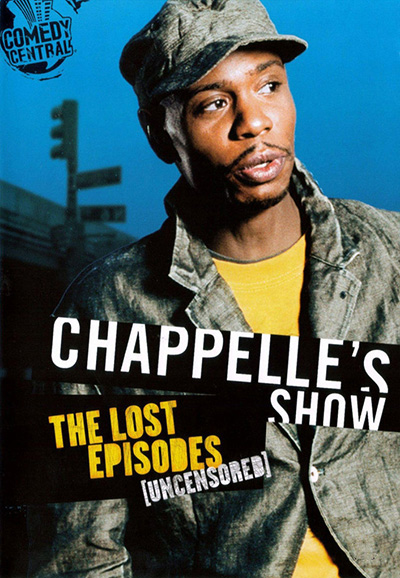

Why Watch
"Dave Chappelle dismantles racial absurdities and pop culture with fearless, boundary-pushing sketches that defined modern sketch comedy forever."
Where to Watch











 Streaming details by:
JustWatch
Streaming details by:
JustWatch
AI Critic Analysis
Series Deep Dive:
Few television productions have left a sharper cultural imprint than Chappelle's Show. Driven by Dave Chappelle's razor-sharp social commentary, the truncated third season—dubbed The Lost Episodes—remains a historic snapshot of brilliant comedy created under immense creative pressure. Featuring legendary parodies and fearless race critiques, Comedy Central delivered a groundbreaking series that exposed American absurdities while permanently recalibrating the standards of television sketch satire.
Season: 3
| Watched? | # | Air Date | Episode Name |
|---|---|---|---|
| E1 | Jul 09, 2006 | Lost Episode 1 | |
| E2 | Jul 16, 2006 | Lost Episode 2 | |
| E3 | Jul 23, 2006 | Lost Episode 3 |
Series Legacy & Historical Archive
Franchise Status: Concluded
Chappelle's Show remains a definitive pillar of sketch comedy television, having concluded its influential run on Comedy Central. The series fundamentally altered the landscape of cable programming by blending fearless social commentary with surrealist character work that resonated across demographic lines. Its ability to dissect racial dynamics and celebrity culture through a lens of biting satire ensured that its sketches became part of the global vernacular, effectively setting a new standard for how television could address complex societal issues while maintaining mainstream appeal.
The show persists as a rewatch staple because its observations on the absurdity of modern life remain strikingly relevant decades after its initial broadcast. Fans return to the series not just for the nostalgia of its iconic catchphrases, but for the raw, unfiltered perspective that Dave Chappelle and Neal Brennan brought to the screen before the era of social media saturation. Its legacy is cemented by its refusal to play it safe, creating a cultural time capsule that continues to challenge audiences while providing some of the most enduring comedic performances in the history of the medium.
If you liked Chappelle's Show:







Technical Details
- Network: Comedy Central
- Seasons: 3
- Years: 2003 - 2006
- Genre: Comedy
- Rating: TV-MA