
Why Watch
"Experience the audacious, boundary-pushing parody that locks iconic cartoon archetypes into an unhinged reality TV pressure cooker."









AI Critic Analysis
Series Deep Dive:
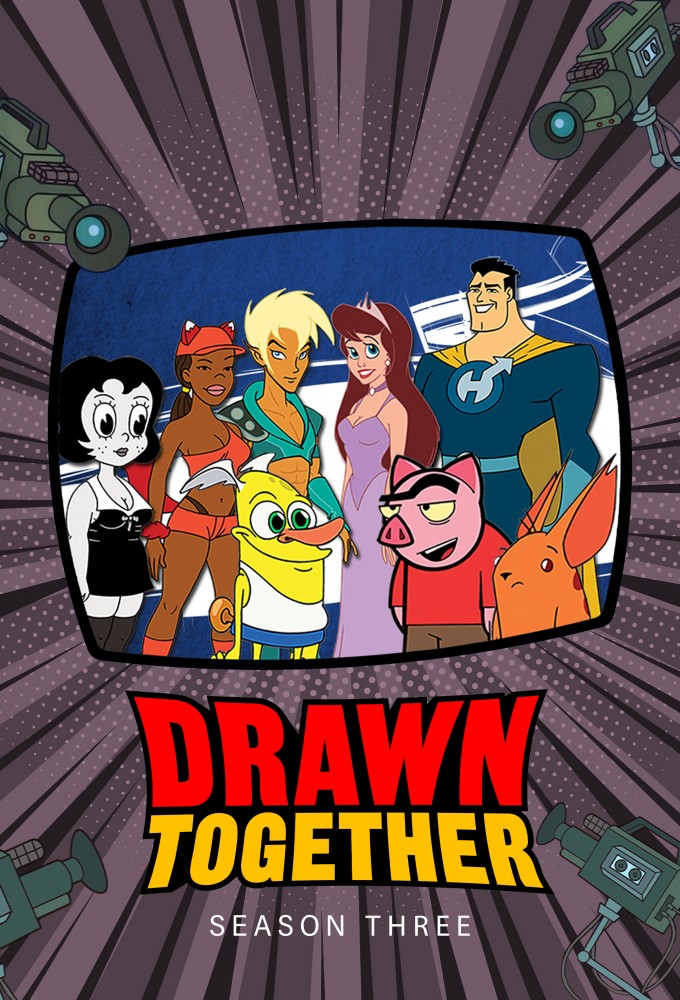
A brazen parody of early-2000s reality television, Drawn Together assembles disparate cartoon caricatures under one roof with shocking, taboo-busting results. Season 3 doubles down on scorched-earth shock humor, lampooning pop culture and animated tropes with unapologetic glee. Co-creators Dave Jeser and Matt Silverstein push their chaotic ensemble into offensive, hilarious extremes, securing the series as a cult relic of Comedy Central's golden era of mature adult animation.
Season: 3
| Watched? | # | Air Date | Episode Name |
|---|---|---|---|
| E1 | Oct 05, 2006 | Freaks & Greeks | |
| E2 | Oct 12, 2006 | Wooldoor Sockbat's Giggle-Wiggle Funny Tickle Non-Traditional Progressive Multicultural Roundtable! | |
| E3 | Oct 19, 2006 | Spelling Applebee's | |
| E4 | Oct 25, 2006 | Unrestrainable Trainable | |
| E5 | Nov 01, 2006 | N.R.A.Y. RAY | |
| E6 | Nov 08, 2006 | Mexican't Buy Me Love | |
| E7 | Nov 15, 2006 | Lost in Parking Space (1) | |
| E8 | Oct 04, 2007 | Lost in Parking Space (2) | |
| E9 | Oct 11, 2007 | Charlotte's Web of Lies | |
| E10 | Oct 18, 2007 | Breakfast Food Killer | |
| E11 | Oct 25, 2007 | Drawn Together Babies | |
| E12 | Nov 01, 2007 | Nipple Ring-Ring Goes to Foster Care | |
| E13 | Nov 08, 2007 | Toot Goes Bollywood | |
| E14 | Nov 14, 2007 | American Idol Parody Clip Show |
Series Legacy & Historical Archive
Franchise Status: Concluded
Drawn Together remains a definitive pillar of adult animated reality parody television, having concluded its influential run on Comedy Central. As one of the first animated series to satirize the burgeoning reality TV phenomenon of the early 2000s, the show utilized a diverse cast of character archetypes, ranging from 1920s cartoons to video game icons, to push the boundaries of transgressive humor and social satire. Its legacy is rooted in its unapologetic willingness to offend every demographic equally, creating a chaotic sandbox where pop culture tropes were deconstructed through a lens of extreme absurdity and shock value. This fearless approach helped pave the way for a more nihilistic brand of animation that prioritizes rapid-fire gag delivery and the subversion of nostalgic tropes, ensuring its place as a cult classic that continues to spark debate over the limits of comedy.
The series remains a staple for modern fans primarily because of its unique status as a time capsule for the mid-2000s media landscape. While its humor is often polarizing, the technical feat of blending disparate animation styles into a cohesive visual narrative remains impressive even by contemporary standards. Fans return to the show to experience its relentless pace and the chemistry of its dysfunctional ensemble, which managed to find moments of genuine character development amidst the crude jokes. In an era where many shows play it safe, the sheer audacity of the series serves as a reminder of a specific period in cable television history where experimental, high-concept parodies could thrive. This enduring appeal is bolstered by the 2010 direct-to-video film, which provided a meta-commentary on its own cancellation and cemented its status as a resilient property within the adult animation genre.
If you liked Drawn Together:





Technical Details
- Network: Comedy Central
- Seasons: 3
- Years: 2004 - 2007
- Genre: Animation, Comedy, Reality
- Rating: TV-MA