
Why Watch
"Witness world history through the daring youth of cinema's greatest archaeologist in George Lucas's ambitious television masterpiece."





AI Critic Analysis
Series Deep Dive:
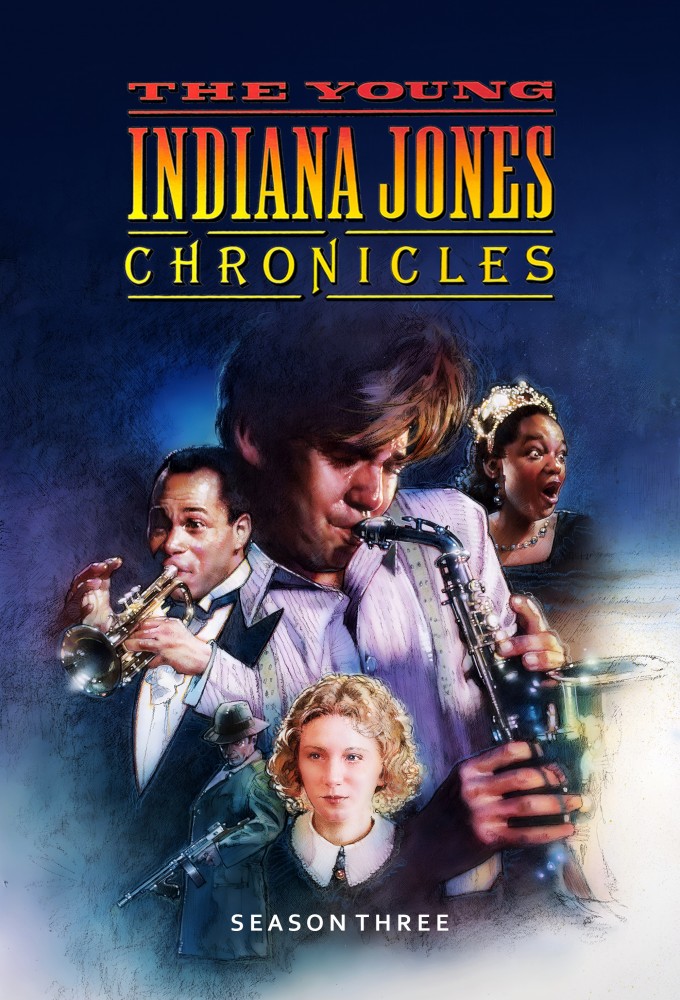
George Lucas expanded his cinematic universe with The Young Indiana Jones Chronicles, transforming period television through unmatched production scale. Season 3 delivers ambitious historical encounters, blending globe-trotting escapades with authentic 20th-century cultural milestones. Featuring Sean Patrick Flanery as the burgeoning adventurer, this final chapter cements the character's formative years across wartime espionage and philosophical conflicts, securing Indiana Jones lore as an unforgettable, educational broadcast experiment.
Season: 3
| Watched? | # | Air Date | Episode Name |
|---|---|---|---|
| E1 | Oct 15, 1994 | The Hollywood Follies, Hollywood, August 1920 (1) | |
| E2 | Oct 15, 1994 | The Hollywood Follies, Hollywood, August 1920 (2) | |
| E3 | Jan 15, 1995 | Treasure of the Peacock's Eye, London/Egypt, November 1919 (1) | |
| E4 | Jan 15, 1995 | Treasure of the Peacock's Eye, South Pacific, November 1919 (2) | |
| E5 | Oct 08, 1995 | Attack of the Hawkmen, Ravenelle, Germany, 1917 (1) | |
| E6 | Oct 08, 1995 | Attack of the Hawkmen, Ahlgorn, Germany 1917 (2) | |
| E7 | Jun 16, 1996 | Travels with Father, Russia 1910 (1) | |
| E8 | Jun 16, 1996 | Travels with Father, Athens 1910 (2) | |
| E9 | Tangiers 1908 | ||
| E10 | Morocco 1917 | ||
| E11 | Palestine, October 1917 (2) | ||
| E12 | Princeton 1919 |
Series Legacy & Historical Archive
Franchise Status: The series remains a standalone prequel collection, though Disney+ has recently integrated the re-edited 'Adventures of Young Indiana Jones' films into their streaming catalog to complement the broader cinematic franchise.
The Young Indiana Jones Chronicles remains a definitive pillar of historical adventure television, having concluded its influential run on ABC. George Lucas utilized the series as a sophisticated educational tool that blended high-stakes pulp action with authentic historical encounters, ranging from the trenches of World War I to the salons of the Harlem Renaissance. By employing a rotating cast of directors and a cinematic budget, the show pushed the boundaries of what was possible on the small screen, leaving behind a legacy of technical innovation and storytelling ambition that transformed the Indiana Jones character from a mere action hero into a witness to the most pivotal moments of the early twentieth century.
The series remains a rewatch staple for fans due to its unique commitment to intellectual curiosity and its impressive guest appearances by future Hollywood legends. Unlike typical spinoffs, it dared to be an anthology of ideas, exploring philosophy, art, and politics through the eyes of a maturing Henry Jones Jr. Its pioneering use of digital effects and location shooting set a new standard for television production values that paved the way for the prestige era of modern streaming series. Today, it stands as a nostalgic bridge for those who value the intersection of cinematic world-building and educational narrative depth.
If you liked The Young Indiana Jones Chronicles:




Technical Details
- Network: ABC (US)
- Seasons: 3
- Years: 1992 - 1996
- Genre: Action, Adventure, Drama, Family, Mystery
- Rating: TV-G