
Why Watch
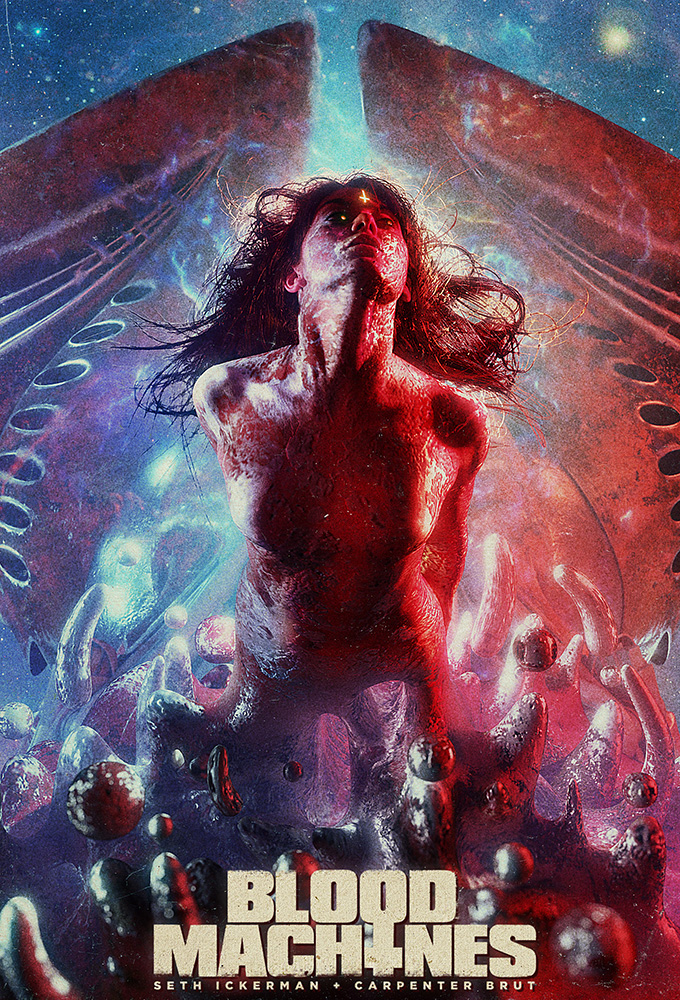
"Dazzling neon visuals meet Carpenter Brut's iconic synthwave score in this mind-bending, space-opera fever dream."










AI Critic Analysis
Series Deep Dive:
Directed by Seth Ickerman, Blood Machines expands the universe of Carpenter Brut's cult music video Turbo Killer into a breathtaking space opera. When two space hunters pursue an elusive rogue ship, they witness an artificial intelligence transcend its mechanical shell into a cosmic goddess. Brimming with 1980s aesthetic tributes and radical visual effects, this short-form Shudder miniseries offers an unapologetically stylish, hallucinatory journey through the outer fringes of cyber-mysticism.
Season: 1
| Watched? | # | Air Date | Episode Name |
|---|---|---|---|
| E1 | May 21, 2020 | Chapter One: Mima | |
| E2 | May 21, 2020 | Chapter Two: Corey | |
| E3 | May 21, 2020 | Chapter Three: Tracy |
Production Note - Limited Series
Production Type: Limited Series
Blood Machines is a standalone Limited Series designed as a completed, finite historical narrative. Born from a successful Kickstarter campaign, this project serves as a visual and narrative expansion of the Turbo Killer music video. The production is characterized by its heavy emphasis on synthwave aesthetics and groundbreaking visual effects, creating a self-contained cosmic odyssey that bridges the gap between music cinema and traditional storytelling.
The creators intentionally structured the narrative to resolve within its brief runtime, focusing on a specific artistic vision rather than a multi-season arc. By utilizing a three-part format for digital streaming platforms, the production team ensured that the journey of the machine-ghost and the scavengers reached a definitive conclusion. This project stands as a unique experiment in crowdfunding and independent filmmaking, intended to exist as a singular piece of media history.
If you liked Blood Machines:



Trailer
Technical Details
- Network: Shudder
- Seasons: 1
- Years: 2020 - 2020
- Genre: Adventure, Mini-Series, Science Fiction