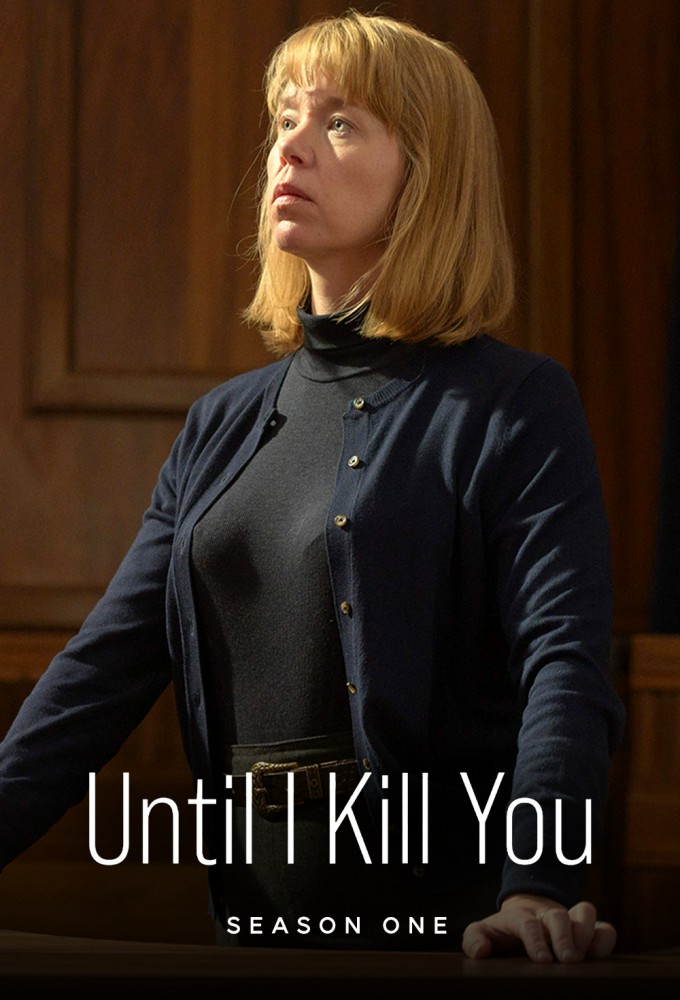

Why Watch
"Delia Balmer's harrowing survival and pursuit of justice anchor this chilling, uncompromising British true-crime masterclass."




AI Critic Analysis
Series Deep Dive:
Anna Maxwell Martin delivers a devastating performance as Delia Balmer in Until I Kill You, chronicling her traumatic relationship with serial killer John Sweeney. ITV1's four-part miniseries avoids sensationalism, offering instead a furious indictment of systemic police negligence. Shaun Evans provides a terrifying counterweight as Sweeney. This rigorous biographical drama confronts institutional failure with unflinching authenticity, cementing its place as an essential, harrowing entry in contemporary British television.
Season: 1
| Watched? | # | Air Date | Episode Name |
|---|---|---|---|
| E1 | Nov 03, 2024 | Love | |
| E2 | Nov 04, 2024 | Hate | |
| E3 | Nov 05, 2024 | Healing | |
| E4 | Nov 06, 2024 | Justice |
Production Note - Limited Series
Production Type: Limited Series
Until I Kill You is a standalone Limited Series designed as a completed, finite historical narrative. The production focuses on the harrowing true story of Delia Balmer, who survived a relationship with serial killer John Sweeney. Produced by World Productions for ITV, the series was structured specifically to cover the timeline of Balmer’s memoir, detailing her initial meeting with Sweeney, the subsequent domestic abuse, his eventual capture, and the long legal battle that followed. By centering the narrative on a specific biographical account, the creators ensured the drama remained a self-contained exploration of survival and systemic failure rather than an ongoing procedural.
The creative team, led by writer Nick Stevens and director Julia Ford, approached the project as a definitive four-part event to maintain the intensity and focus of the source material. Starring Anna Maxwell Martin and Shaun Evans, the series concludes with the resolution of the criminal trial and the protagonist's path toward recovery, leaving no narrative threads for future seasons. This intentional design as a miniseries allows the production to function as a complete cinematic document of a real-life survivor's experience without the need for expansion or fictionalized sequels.
If you liked Until I Kill You:


Trailer
Technical Details
- Network: ITV1
- Seasons: 1
- Years: 2024 - 2024
- Genre: Crime, Drama, Mini-Series, Thriller