
Why Watch
"Rapid-fire wit meets poignant family dynamics in a charming, coffee-fueled portrait of an unbreakable mother-daughter bond."
Tone: Witty, Warm, Bittersweet Dramedy
Streaming Ranks:








AI Critic Analysis
Series Deep Dive:
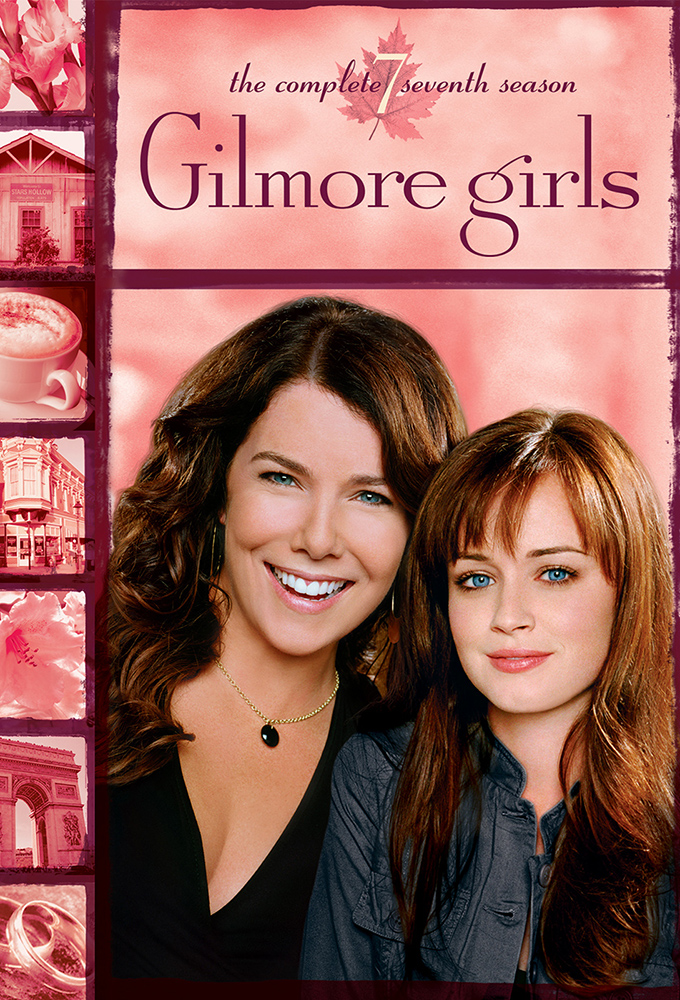
Serving as the definitive broadcast conclusion, Gilmore Girls Season 7 steers Lorelai and Rory through crucial career milestones and romantic reckonings. Despite notable behind-the-scenes creative shifts, the series sustains its trademark eccentric town charm and rapid-fire dialogue. Anchored by Lauren Graham's charismatic central performance, this final chapter delivers a deeply emotional farewell to Stars Hollow, cementing the series as an enduring touchstone of turn-of-the-century television dramedy.
Analysis Refined:March 2026
Scheduled next refinement: in 442 days
Season: 7
| Watched? | # | Air Date | Episode Name |
|---|---|---|---|
| E1 | Sep 26, 2006 | The Long Morrow | |
| E2 | Oct 03, 2006 | That's What You Get, Folks, For Makin' Whoopee | |
| E3 | Oct 10, 2006 | Lorelai's First Cotillion | |
| E4 | Oct 17, 2006 | 'S Wonderful, 'S Marvelous | |
| E5 | Oct 24, 2006 | The Great Stink | |
| E6 | Nov 07, 2006 | Go, Bulldogs! | |
| E7 | Nov 14, 2006 | French Twist | |
| E8 | Nov 21, 2006 | Introducing Lorelai Planetarium | |
| E9 | Nov 28, 2006 | Knit, People, Knit! | |
| E10 | Dec 05, 2006 | Merry Fisticuffs | |
| E11 | Jan 23, 2007 | Santa's Secret Stuff | |
| E12 | Jan 30, 2007 | To Whom It May Concern | |
| E13 | Feb 06, 2007 | I'd Rather Be In Philadelphia | |
| E14 | Feb 13, 2007 | Farewell, My Pet | |
| E15 | Feb 20, 2007 | I'm a Kayak, Hear Me Roar | |
| E16 | Feb 27, 2007 | Will You Be My Lorelai Gilmore? | |
| E17 | Mar 06, 2007 | Gilmore Girls Only | |
| E18 | Apr 17, 2007 | Hay Bale Maze | |
| E19 | Apr 24, 2007 | It's Just Like Riding a Bike | |
| E20 | May 01, 2007 | Lorelai? Lorelai? | |
| E21 | May 08, 2007 | Unto The Breach | |
| E22 | May 15, 2007 | Bon Voyage |
Series Legacy & Historical Archive
Franchise Status: Concluded Historical Archive
Gilmore Girls remains a definitive pillar of television, having concluded its influential run on The CW. Across seven seasons, the vibrant atmosphere of Stars Hollow showcased rapid-fire dialogue, intricate intergenerational bonds, and profound emotional warmth. Creator Amy Sherman-Palladino shaped a unique narrative voice that captured familial dynamics with unprecedented wit and heart.
While the subsequent 2016 miniseries offered brief closure, the original series endures as an iconic cultural touchstone, defining nostalgic cozy viewing and inspiring countless dramedies with its enduring legacy.
While the subsequent 2016 miniseries offered brief closure, the original series endures as an iconic cultural touchstone, defining nostalgic cozy viewing and inspiring countless dramedies with its enduring legacy.
Oracle Insights Refined:March 2026
Scheduled next refinement: in 402 days
If you liked Gilmore Girls:





Technical Details
- Network: The CW
- Seasons: 7
- Years: 2000 - 2007
- Genre: Drama, Romance
- Rating: TV-14
Frequently Asked Questions
Gilmore Girls consists of seven original seasons that aired between 2000 and 2007 on The WB and The CW. In 2016, Netflix released a four-part revival miniseries titled Gilmore Girls: A Year in the Life, which effectively serves as an eighth season.
The original series concluded after its seventh season due to a combination of factors, including failed contract negotiations with creators Amy Sherman-Palladino and Daniel Palladino. Additionally, the transition of the network from The WB to The CW and rising production costs contributed to the decision to stop production.
While fans frequently speculate about more episodes, there is currently no official confirmation that a second revival is in development. Both the creators and the lead cast members have expressed an openness to returning if the timing and story are right, but no projects are currently active.
There are no official spin-off series currently in existence or on the air. A proposed spin-off titled Windward Circle, which was intended to follow the character Jess Mariano to California, filmed a pilot episode during the third season but was never picked up for a full series.
The series was created by Amy Sherman-Palladino, who acted as the primary showrunner alongside her husband, Daniel Palladino, for the first six seasons. After a hiatus during the seventh season, the duo returned to write and direct the 2016 Netflix revival to finish the story on their own terms.
The complete seven-season original run and the 2016 revival miniseries are currently available for streaming globally on Netflix. The series is also available for digital purchase on platforms like Amazon Prime Video and Apple TV.
FAQ Refined:March 2026
Scheduled next refinement: in 186 days