
Why Watch
"Razor-sharp British political satire dismantles weekly headlines with fearless humor, veteran captains, and dynamic guest hosts."
Tone: Caustic, Irreverent Satire, Witty
AI Critic Analysis
Series Deep Dive:
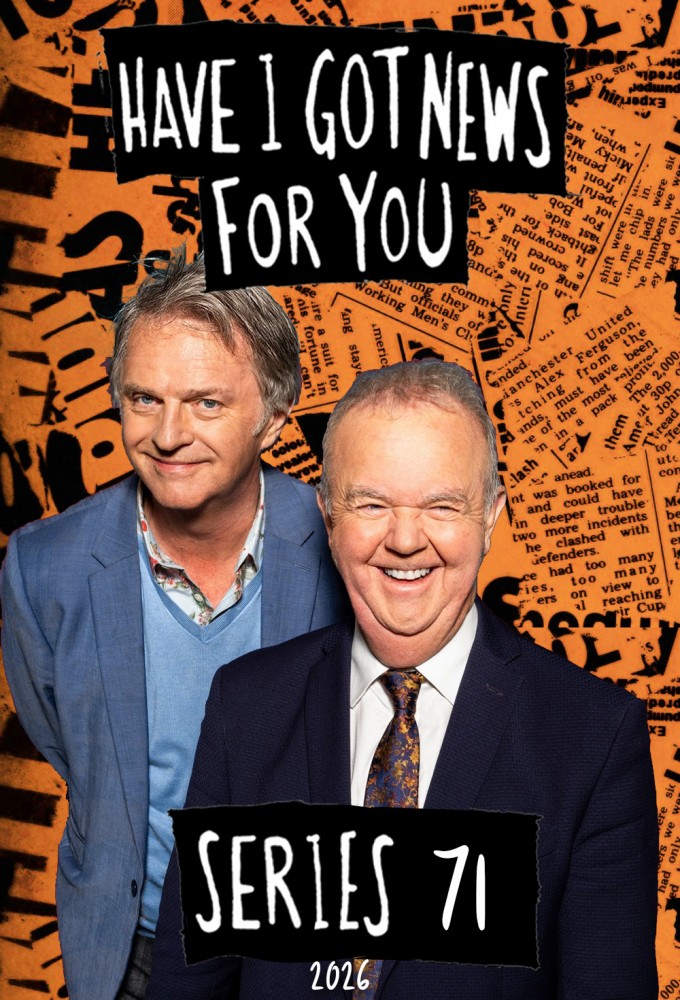
A cornerstone of British broadcasting, Have I Got News for You remains essential appointment viewing. Team captains Ian Hislop and Paul Merton dissect media chaos with merciless precision alongside revolving guest chairs. Season 72 continues this venerable institution's legacy, skewering Westminster politics and global headlines. Its enduring relevance lies in relentless journalistic cynicism, sharp improvisation, and an unmatched ability to make contemporary socio-political turmoil genuinely hilarious.
Analysis Refined:May 2026
Scheduled next refinement: in 219 days
Season: 72
| Watched? | # | Air Date | Episode Name |
|---|---|---|---|
| E1 | Oct 02, 2026 | Richard Ayoade, Charlotte Church, Gyles Brandreth | |
| E2 | Oct 09, 2026 | Alex Jones, Guest 1, Guest 2 | |
| E3 | Oct 16, 2026 | Jason Manford, Janet Street-Porter, Guest 2 | |
| E4 | Oct 23, 2026 | TBA | |
| E5 | Oct 30, 2026 | TBA | |
| E6 | Nov 06, 2026 | TBA | |
| E7 | Nov 13, 2026 | TBA | |
| E8 | Nov 20, 2026 | TBA | |
| E9 | Nov 27, 2026 | TBA | |
| E10 | Dec 04, 2026 | TBA |
Scheduling Insights - Seasonal Series
Release Window: Biannual (April & October)
Have I Got News for You has maintained a steady Biannual rhythm for over 30 years, typically returning in April. As a cornerstone of British satirical television, the series traditionally delivers two ten-episode blocks per year, with the spring series launching in April and the autumn series following in October. This rigid seasonal scheduling has transformed the program into a reliable fixture of the BBC One lineup, ensuring consistent coverage of the political calendar.
Throughout its extensive broadcast history, the show has rarely deviated from this twice-yearly cadence, even transitioning seamlessly from BBC Two to BBC One in 2000. Its longevity is anchored by the permanent presence of team captains Ian Hislop and Paul Merton, who have navigated the show through various hosting formats since 2002. This predictable release pattern allows the production to capture major electoral and legislative events, solidifying its role as the definitive topical panel show in the United Kingdom.
Oracle Insights Refined:March 2026
Scheduled next refinement: in 246 days
If you liked Have I Got News for You:






Technical Details
- Network: BBC One
- Seasons: 72
- Years: 1990 - 2026
- Genre: Comedy, Game Show, News
- Rating: TV-MA
Frequently Asked Questions
Yes, both the original British series and its American adaptation have been officially renewed for upcoming seasons. The BBC version is set to return for its 72nd series in late 2026, while CNN has confirmed a fifth season for the U.S. version.
The long-running British series traditionally follows a dual-season schedule with premieres in the spring, typically April, and the fall, typically October. The American version on CNN has also adopted a fall premiere window, with Season 5 scheduled to debut on September 12, 2026.
The British series generally produces 9 to 10 episodes per series, resulting in roughly 20 episodes annually across its two yearly runs. The American adaptation has maintained a consistent 10-episode order for each of its first four seasons on CNN.
Series 71 of the original UK program premiered on April 3, 2026, and concluded its run on June 5, 2026. This spring season consisted of 10 episodes featuring guest hosts like Roy Wood Jr. and Victoria Coren Mitchell.
The U.S. version is hosted by Roy Wood Jr., who remains the permanent lead for the upcoming fifth season. He is joined by regular team captains Amber Ruffin and Michael Ian Black, who guide rotating guests through the week's top headlines.
In the UK, episodes are available to stream on BBC iPlayer shortly after their Friday night broadcast. In the United States, the CNN adaptation is available on the CNN app and streams the next day on Max.
FAQ Refined:March 2026
Scheduled next refinement: in 294 days