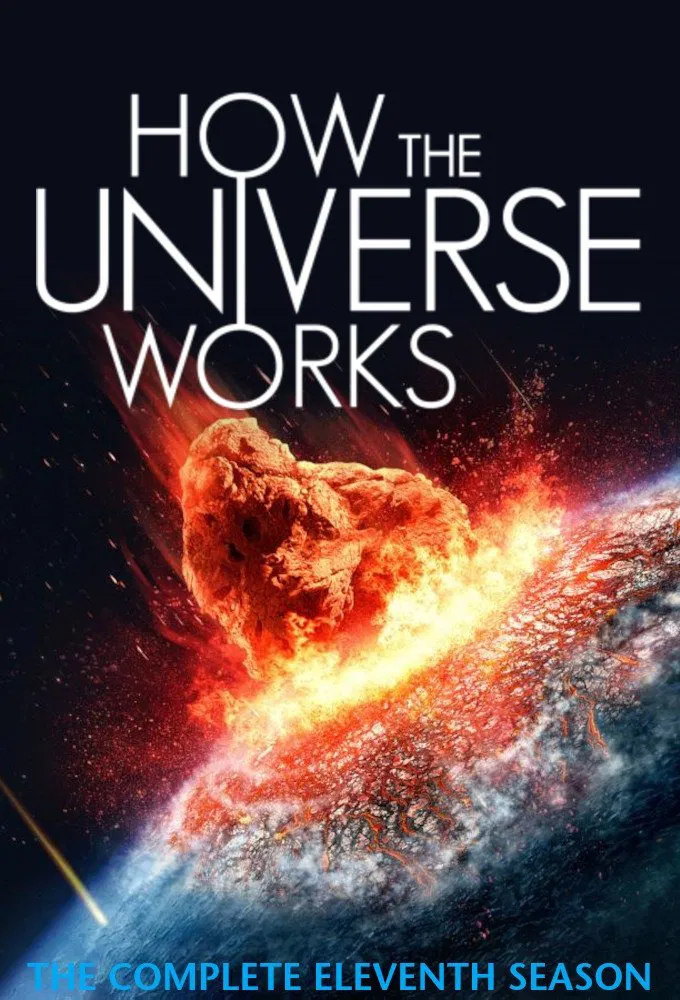

Why Watch
"Marvel at stunning cosmic phenomena backed by cutting-edge astrophysics and vivid, cinematic visual effects across eleven landmark seasons."












AI Critic Analysis
Series Deep Dive:
Serving as the gold standard for modern space documentary television, How the Universe Works decodes astronomical mysteries with uncompromising scientific rigor. Anchored by world-renowned theoretical physicists and state-of-the-art CGI, the landmark Science Channel series takes audiences from chaotic planetary nurseries to volatile supermassive black holes. With Season 11 closing out its definitive run, the series remains an essential, monumental blueprint for cosmological exploration and stellar understanding.
Season: 11
| Watched? | # | Air Date | Episode Name |
|---|---|---|---|
| E1 | Mar 06, 2023 | The Moons of Saturn | |
| E2 | Mar 12, 2023 | A Robot's Guide to Mars | |
| E3 | Mar 19, 2023 | Most Violent Event in the Universe | |
| E4 | Mar 26, 2023 | Asteroid: Countdown to Catastrophe | |
| E5 | Apr 02, 2023 | Solar System Special |
Series Legacy & Historical Archive
Franchise Status: Legacy / Concluded
How the Universe Works remains a definitive pillar of science documentary television, having concluded its influential run on Science Channel. The series established a high benchmark for astronomical storytelling by blending cutting-edge visual effects with accessible theoretical physics. Its legacy lies in its ability to humanize the vast scales of space, turning complex concepts like dark energy and stellar evolution into compelling narratives that resonate with a global audience. By featuring a consistent roster of charismatic experts, the show created a sense of intellectual community that transformed passive viewing into an educational journey.
This program remains a rewatch staple because it serves as a definitive visual encyclopedia of the cosmos that feels both timeless and urgent. Even as new astronomical discoveries emerge, the foundational lessons and high-quality CGI provide a comforting reliability for enthusiasts who return to its episodes for clarity and wonder. Its cultural DNA is woven into the modern era of science communication, proving that there is a deep, enduring appetite for content that explores the origins of existence and the mechanics of the stars.
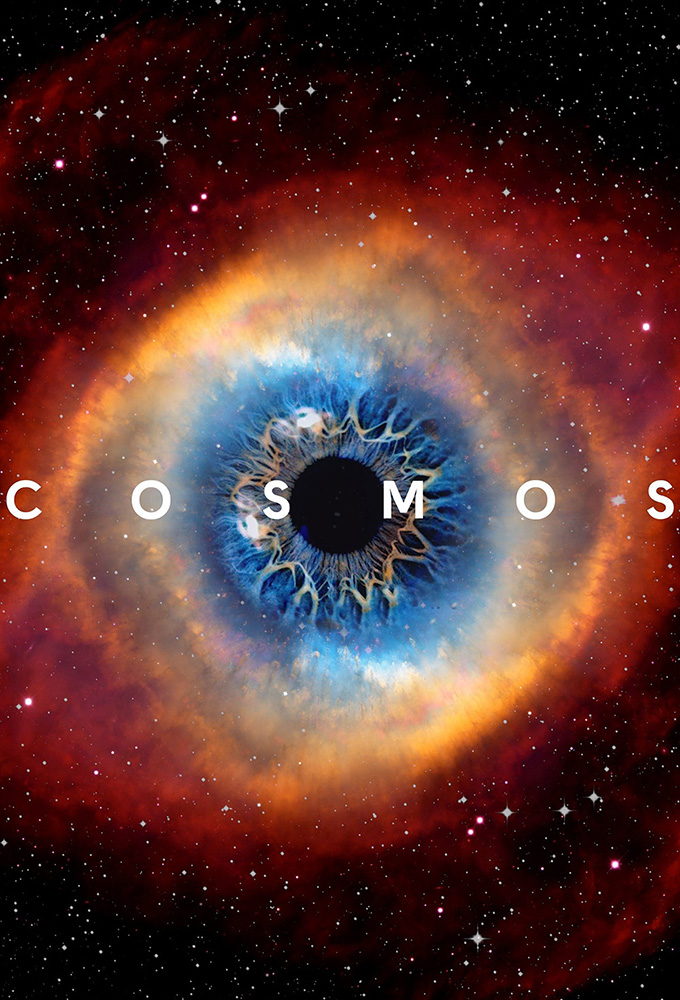
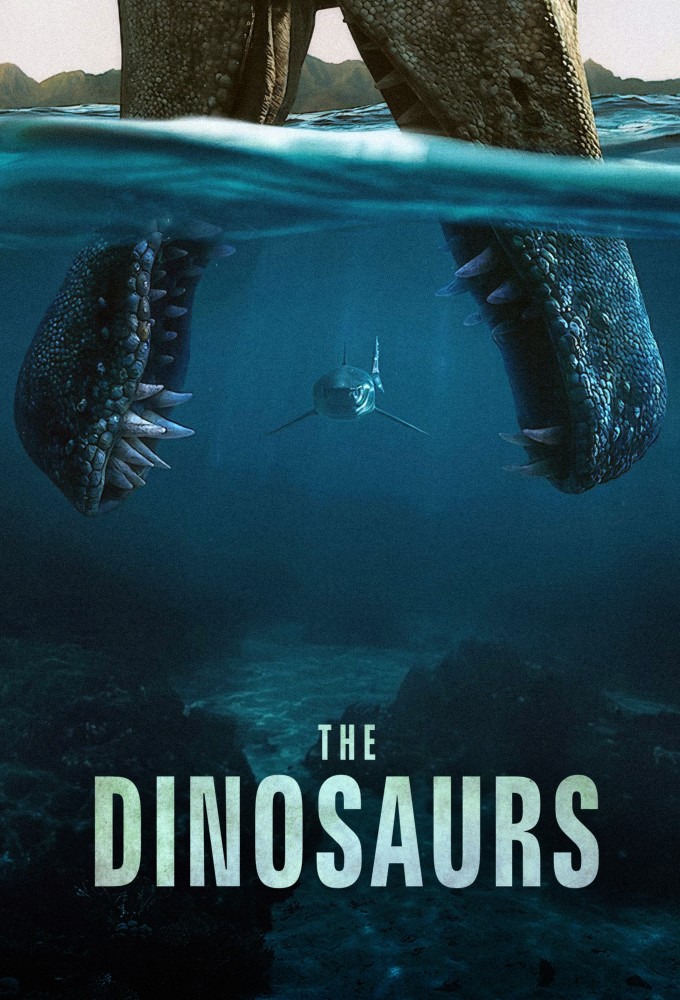
If you liked How the Universe Works:






Technical Details
- Network: Science Channel
- Seasons: 11
- Years: 2010 - 2023
- Genre: Documentary
- Rating: TV-PG