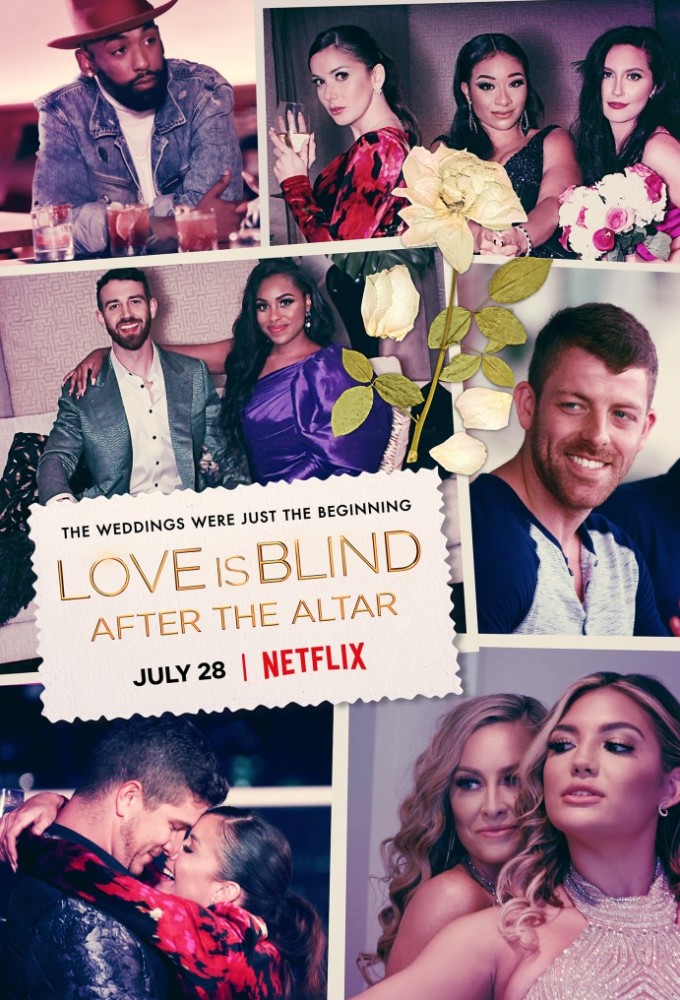

Why Watch
"Revisit fractured romances and simmering grudges as former pod singles confront the real fallout of their hasty nuptials."
AI Critic Analysis
Series Deep Dive:
Serving as the definitive postscript to Netflix's social experiment, Love is Blind: After the Altar cuts past wedding day euphoria. Season 4 gathers married pairs and estranged exes one year later, dissecting unresolved grievances outside the experiment's protective bubble. Through tense social gatherings and blunt confessionals, this final chapter delivers unvarnished closure for dedicated reality television enthusiasts who demand to know if modern blind romance withstands authentic domestic pressure.
Season: 4
| Watched? | # | Air Date | Episode Name |
|---|---|---|---|
| E1 | Sep 01, 2023 | After the Altar: The One Year Anniversary | |
| E2 | Sep 01, 2023 | After the Altar: Moving On and Moving In | |
| E3 | Sep 01, 2023 | After the Altar: Settling Scores |
Series Legacy & Historical Archive
Franchise Status: Active
Love is Blind: After the Altar remains a definitive pillar of reality television, having concluded its influential run on Netflix. This series extension serves as a crucial post-script to the social experiment, offering viewers a chance to witness the long-term consequences of unconventional unions. Its cultural DNA is rooted in the transition from curated romantic fantasy to the stark realities of domestic life, a shift that has redefined how audiences consume dating narratives. By focusing on the aftermath of the altar, the show provides a rare longitudinal look at personality clashes and family dynamics that keep fans engaged long after the initial weddings.
The enduring rewatchability of the series stems from its unique position as a bridge between seasons, functioning as both a reunion and a standalone drama. Fans return to these episodes to track the evolution of their favorite participants, finding value in the unresolved tensions and surprising reconciliations that occur outside the pods. As a staple of the modern streaming era, it has cemented the idea that the story does not end with a 'yes' or 'no' but continues through the complex navigation of public and private identities. This legacy ensures its place in the reality pantheon as a masterclass in sustaining audience investment beyond the traditional competition format.