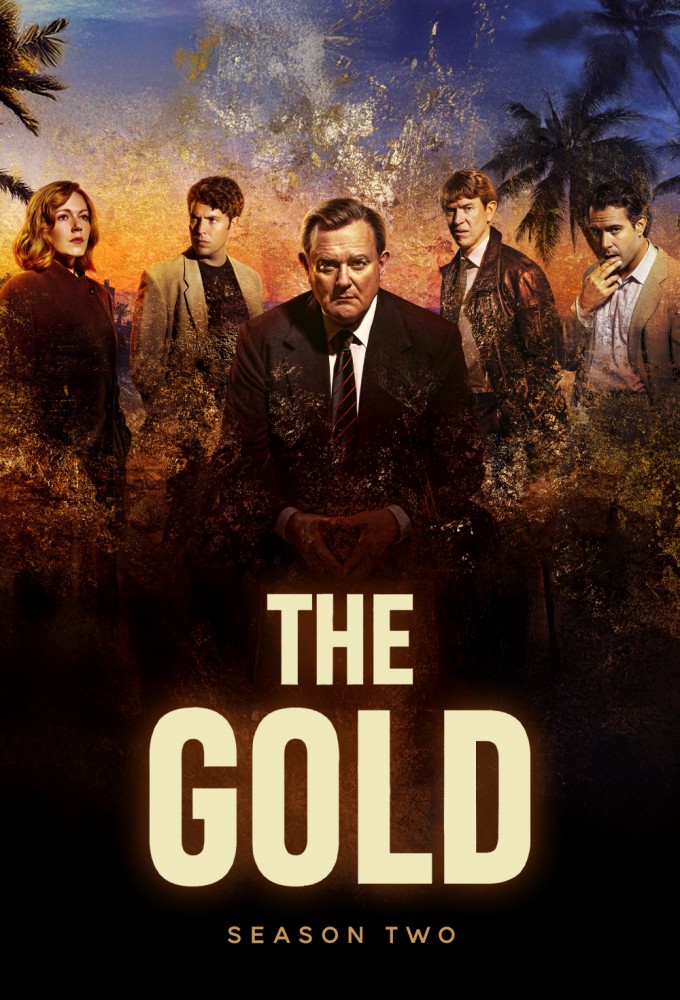

Why Watch
"Follow the gripping fallout of Britain's most audacious heist through sharp 1980s criminal intrigue and class tension."
Tone: Gritty, Cerebral British Crime






AI Critic Analysis
Series Deep Dive:
Inspired by the 1983 Brink's-Mat robbery, The Gold charts how stolen bullion transformed British crime and finance forever. Across two taut seasons on BBC One, Neil Forsyth explores systemic corruption, money laundering, and class warfare. Outstanding performances anchor a complex police procedural that treats the aftermath of an infamous heist with ruthless narrative focus. The result is a complete, masterfully executed portrait of greed in 1980s Britain.
Analysis Refined:March 2026
Scheduled next refinement: in 495 days
Season: 2
| Watched? | # | Air Date | Episode Name |
|---|---|---|---|
| E1 | Jun 08, 2025 | Episode 1 | |
| E2 | Jun 10, 2025 | Episode 2 | |
| E3 | Jun 15, 2025 | Episode 3 | |
| E4 | Jun 16, 2025 | Episode 4 | |
| E5 | Jun 22, 2025 | Episode 5 | |
| E6 | Jun 23, 2025 | Episode 6 |
Series Legacy & Historical Archive
Franchise Status: Season 2 commissioned and in production; expanding the Brink's-Mat criminal saga.
The Gold remains a definitive pillar of television, having concluded its influential run on BBC One. This gripping dramatization of the 1983 Brink's-Mat robbery redefined the British heist thriller, elevating true crime into a sweeping social inquest. Anchored by phenomenal turns from Hugh Bonneville and Jack Lowden, the production meticulously untangled the complex web of money laundering, social class fractures, and institutional corruption. It captures a seismic cultural epoch, etching an indelible mark across the landscape of modern television narrative storytelling.
Oracle Insights Refined:September 2026
Scheduled next refinement: in 504 days
If you liked The Gold:








Trailer
Technical Details
- Network: BBC One
- Seasons: 2
- Years: 2023 - 2025
- Genre: Crime, Drama
Frequently Asked Questions
The Gold produced a total of two seasons comprising 12 episodes across its run. The first season premiered in February 2023, followed by a second six-part series that aired on BBC One in October 2024.
The Gold concluded its original run in November 2024 following the broadcast of its second series finale. The drama reached its natural narrative conclusion after fully dramatizing the sprawling aftermath, laundering network, and remaining legal trials associated with the 1983 Brink's-Mat robbery.
There are no credible reports or official announcements regarding a third season, reboot, or continuation. Creator Neil Forsyth designed the production to comprehensively cover the historical timeline of the Brink's-Mat heist and its laundering operations, bringing the core story to a definitive close.
No canonical spin-offs, prequels, or cinematic tie-in films have been produced or commissioned. The television drama stands as a self-contained dramatization of real-world British criminal history without any expanded fictional universe.
The Gold is based on the infamous Brink's-Mat robbery of November 1983, in which armed robbers inadvertently stole twenty-six million pounds worth of gold bullion near Heathrow Airport. The series chronicles the subsequent money-laundering schemes, police investigations, and long-term societal fallout stemming from the theft.
FAQ Refined:March 2026
Scheduled next refinement: in 345 days