
Why Watch
"Revisit the iconic sci-fi saga where reptilian conquerors disguise their sinister invasion behind promises of interstellar peace."
Tone: Campy, Tense, Dystopian Sci-Fi


AI Critic Analysis
Series Deep Dive:
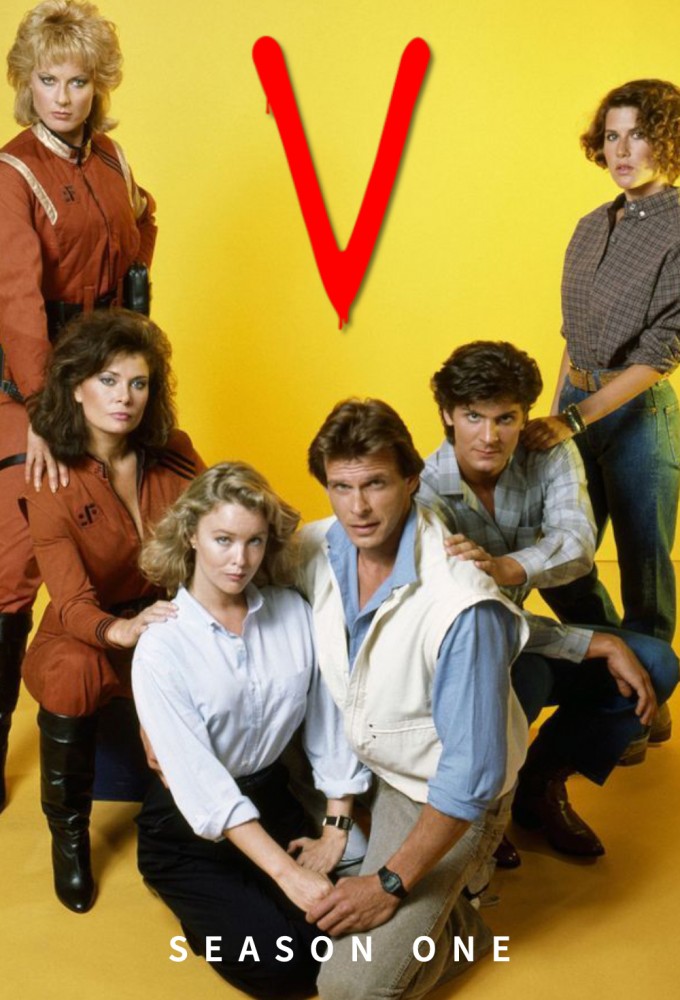
Serving as the weekly continuation of the monumental 1980s miniseries, V shifts alien paranoia into pulpy serialized television. Following the human resistance fighting reptilian invaders led by the ruthless Diana, the series balances Cold War political allegories with creature-feature spectacle. While more melodrama-heavy than its predecessors, this vintage NBC classic remains essential viewing for retro sci-fi enthusiasts revisiting television's greatest alien invasion landmarks.
Analysis Refined:March 2026
Scheduled next refinement: in 461 days
Season: 1
| Watched? | # | Air Date | Episode Name |
|---|---|---|---|
| E1 | Oct 26, 1984 | Liberation Day | |
| E2 | Nov 02, 1984 | Dreadnought | |
| E3 | Nov 09, 1984 | Breakout | |
| E4 | Nov 09, 1984 | The Deception | |
| E5 | Nov 16, 1984 | The Sanction | |
| E6 | Nov 23, 1984 | Visitors' Choice | |
| E7 | Nov 30, 1984 | The Overlord | |
| E8 | Dec 07, 1984 | The Dissident | |
| E9 | Dec 14, 1984 | Reflections in Terror | |
| E10 | Jan 04, 1985 | The Conversion | |
| E11 | Jan 11, 1985 | The Hero | |
| E12 | Jan 18, 1985 | The Betrayal | |
| E13 | Feb 01, 1985 | The Rescue | |
| E14 | Feb 08, 1985 | The Champion | |
| E15 | Feb 15, 1985 | The Wildcats | |
| E16 | Feb 22, 1985 | The Littlest Dragon | |
| E17 | Mar 08, 1985 | War of Illusions | |
| E18 | Mar 15, 1985 | The Secret Underground | |
| E19 | Mar 22, 1985 | The Return |
Series Legacy & Historical Archive
Franchise Status: Concluded Historical Archive
V remains a definitive pillar of television, having concluded its influential run on NBC. This groundbreaking science fiction series captivated audiences with its chilling allegory of fascism, alien visitors, and human resistance. Featuring unforgettable practical effects and intense Cold War paranoia, the saga delivered indelible pop culture moments, notably the shocking reptilian reveals. While subsequent reboots attempted to recapture its distinct magic, the original broadcast stands as an ambitious benchmark for serialized network television, cementing its enduring legacy in sci-fi history.
Oracle Insights Refined:March 2026
Scheduled next refinement: in 486 days
If you liked V:







Technical Details
- Network: NBC
- Seasons: 1
- Years: 1984 - 1985
- Genre: Action, Adventure, Drama, Mini-Series, Science Fiction
- Rating: TV-14
Frequently Asked Questions
The series was canceled primarily due to its high production costs and a significant decline in ratings throughout its run. NBC ultimately decided the show was too expensive to maintain despite the success of the preceding miniseries.
There is only one official season of the weekly television series, which consists of 19 episodes. It followed the original 1983 miniseries and the 1984 three-part sequel titled V: The Final Battle.
Original creator Kenneth Johnson has long sought to bring the franchise back to the big screen with a project titled V: The Movie. While Desilu Studios announced a film trilogy in 2018, there have been few concrete updates regarding production or a release date.
There are no live-action television spin-offs, but the franchise expanded through a series of novels and a DC Comics run in the 1980s. A reimagined version of the series also aired on ABC from 2009 to 2011, serving as a modern remake of the original premise.
The series ends on an unresolved cliffhanger because the show was canceled before the writers could conclude the story. The final episode, titled The Return, leaves several major plot points open regarding the fate of the resistance and the Visitors.
The 2009 series is a complete reboot of the franchise rather than a sequel or continuation of the 1980s timeline. It updates the technology and characters for a modern audience while keeping the core theme of reptilian aliens hiding behind human skins.
FAQ Refined:March 2026
Scheduled next refinement: in 193 days