
Why Watch
"Marvel's iconic mutants confront tragedy in northern Japan through Madhouse's signature kinetic animation and sharp emotional stakes."


AI Critic Analysis
Series Deep Dive:
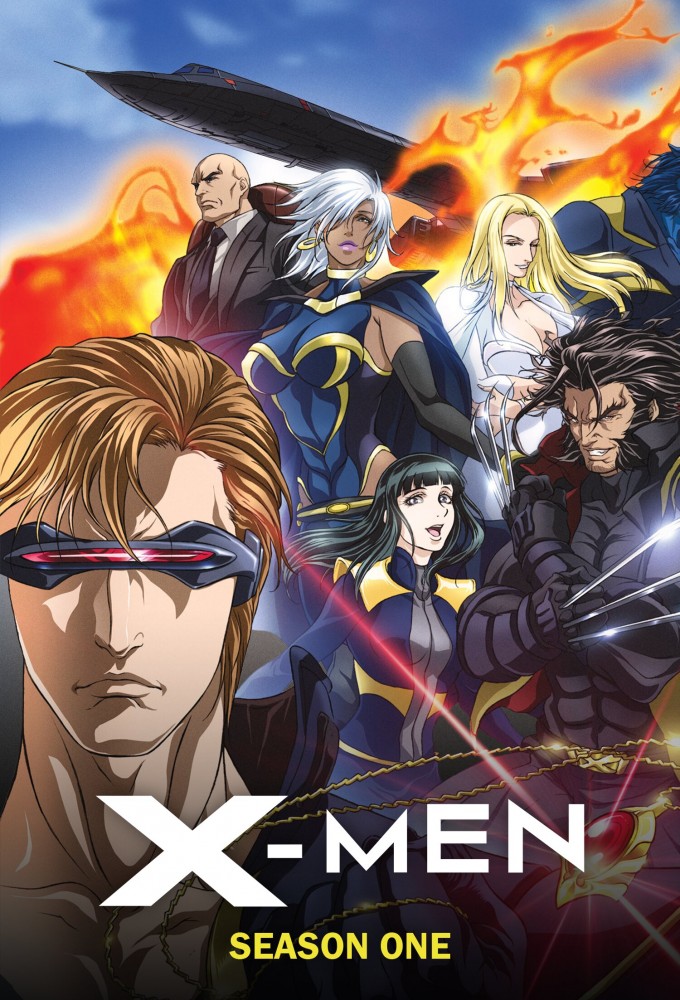
Following Jean Grey's death, Professor Xavier reassembles the splintered team to investigate mutant disappearances in Tohoku, Japan. Produced by Madhouse for Animax, X-Men reimagines the classic superhero canon through a distinctly sleek anime lens. The twelve-episode run explores grief, the sinister U-Men syndicate, and psychological trauma, anchored by precise action choreography and dark, brooding aesthetic direction that offers fans a focused, complete standalone story.
Season: 1
| Watched? | # | Air Date | Episode Name |
|---|---|---|---|
| E1 | Apr 01, 2011 | The Return (Joining Forces) | |
| E2 | Apr 08, 2011 | U-Men (Mutant Hunting) | |
| E3 | Apr 15, 2011 | Armor (Awakening) | |
| E4 | Apr 22, 2011 | Transformation (Secondary Mutation) | |
| E5 | Apr 29, 2011 | Power (Unity) | |
| E6 | May 13, 2011 | Conflict (Contested) | |
| E7 | May 20, 2011 | Betrayal (Shock) | |
| E8 | May 27, 2011 | Lost (Signs) | |
| E9 | Jun 03, 2011 | Revelations (From Behind The Scenes) | |
| E10 | Jun 10, 2011 | Countdown (Truth) | |
| E11 | Jun 17, 2011 | Revenge (End) | |
| E12 | Jun 24, 2011 | Destiny (Bond) |
Series Legacy & Historical Archive
Franchise Status: Revived via X-Men '97 on Disney+ with additional seasons currently in development.
X-Men remains a definitive pillar of Animated television, having concluded its influential run on Fox Kids. The series transcended the standard Saturday morning cartoon format by tackling complex social themes of prejudice, identity, and systemic inequality through the lens of mutant rights. By translating iconic comic book arcs into a serialized narrative, it established a sophisticated storytelling blueprint that proved adult audiences and children alike could engage with mature, long-form character development in an animated medium.
Its lasting cultural DNA is evident in the modern superhero landscape, where the show's aesthetic and character interpretations remain the definitive versions for a generation of fans. The series remains a rewatch staple because of its high-stakes drama and the emotional resonance of the central conflict between Professor X and Magneto. Even decades later, the combination of its memorable voice acting and its willingness to confront difficult moral dilemmas ensures its position as a cornerstone of the Marvel legacy.
If you liked X-Men:






Technical Details
- Network: Animax
- Seasons: 1
- Years: 2011 - 2011
- Genre: Action, Adventure, Animation, Anime, Fantasy, Science Fiction
- Rating: TV-14