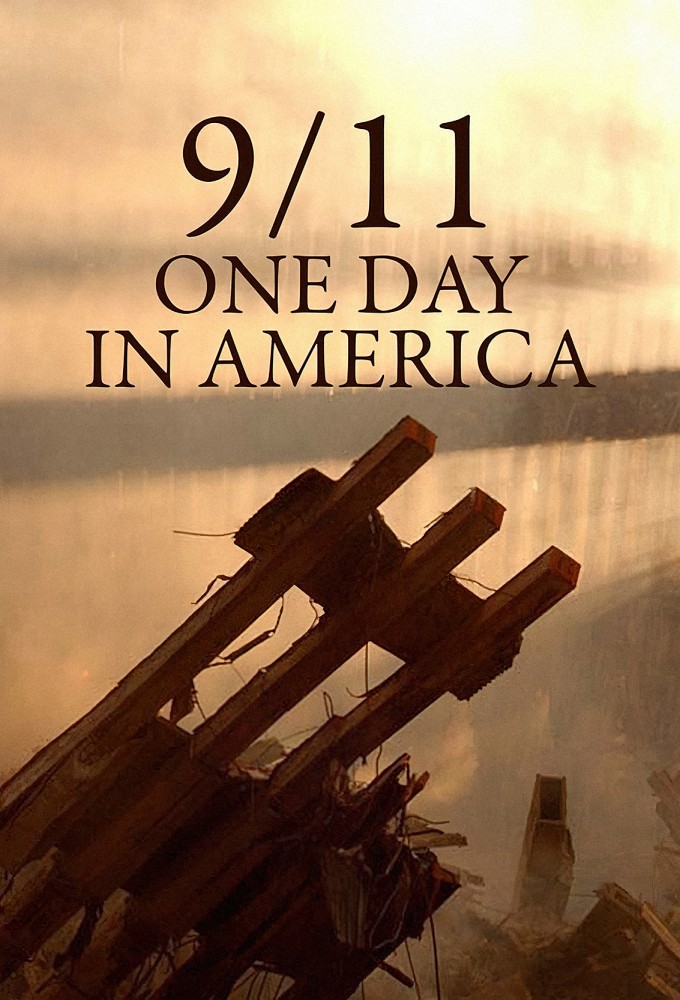

Why Watch
"Experience an unflinching, meticulously restored minute-by-minute account of historic tragedy through the voices of those who survived it."











AI Critic Analysis
Series Deep Dive:
Produced in collaboration with the 9/11 Memorial & Museum, 9/11: One Day in America stands as a definitive historical document. Director Daniel Bogado reconstructs September 11 with extraordinary archival clarity and firsthand testimony. By eschewing outside commentary for ground-level perspective, this National Geographic limited series offers an unforgettable chronicle of catastrophe and human endurance. It remains an essential, deeply moving record of a day that reshaped modern history.
Season: 1
| Watched? | # | Air Date | Episode Name |
|---|---|---|---|
| E1 | Aug 29, 2021 | First Response | |
| E2 | Aug 30, 2021 | The South Tower | |
| E3 | Aug 30, 2021 | Collapse | |
| E4 | Aug 31, 2021 | The Cloud | |
| E5 | Aug 31, 2021 | I'm Coming for You, Brother | |
| E6 | Sep 01, 2021 | It's All Gone, Kid |
Production Note - Limited Series
Production Type: Limited Series
9/11: One Day in America is a standalone Limited Series designed as a completed, finite historical narrative. Produced by 72 Films for National Geographic in official collaboration with the 9/11 Memorial & Museum, the production was conceived as a definitive chronological record of the attacks. The creators utilized over 950 hours of archival footage, much of it previously unseen, to reconstruct the events of that single day across six distinct chapters. Because the series functions as a comprehensive historical document focused on a specific calendar date, the narrative reaches a natural and intentional conclusion once the timeline of the immediate aftermath is exhausted.
The production scale involved a three-year development period to ensure the highest level of accuracy and sensitivity regarding the survivors testimonies. By focusing exclusively on the human experience during the twenty-four hours of the tragedy, the series avoids the open-ended nature of traditional episodic television. It was marketed and produced as a finite commemorative event for the twentieth anniversary of the attacks, leaving no creative or structural room for additional seasons. The series stands as a complete cinematic archive, fulfilling its mission to preserve first-hand accounts for future generations without the need for further expansion.
If you liked 9/11: One Day in America:






Trailer
Technical Details
- Network: National Geographic
- Seasons: 1
- Years: 2021 - 2021
- Genre: Documentary