
Why Watch
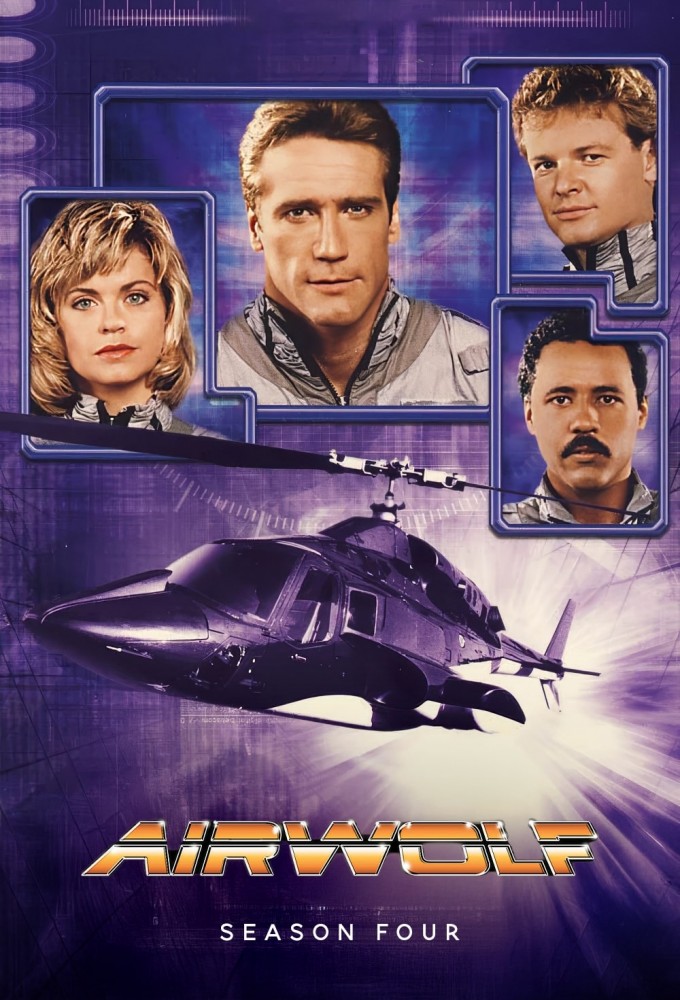
"Experience the gritty final chapter of military espionage featuring the ultimate high-tech supersonic attack helicopter in television history."




AI Critic Analysis
Series Deep Dive:
USA Network brought a distinct shift to Airwolf with Season 4, recasting the cockpit dynamic around St. John Hawke. While leaner production values define this concluding run, the show maintains its core blend of high-altitude thrills and covert geopolitics. It stands as a fascinating artifacts of late-eighties syndicated television, delivering vintage aerial combat that resolute fans of military action and retro tech thrillers continue to revisit decades later.
Season: 4
| Watched? | # | Air Date | Episode Name |
|---|---|---|---|
| E1 | Jan 23, 1987 | Blackjack | |
| E2 | Jan 30, 1987 | Escape | |
| E3 | Feb 06, 1987 | A Town for Hire | |
| E4 | Feb 13, 1987 | Salvage | |
| E5 | Feb 20, 1987 | Windows | |
| E6 | Feb 27, 1987 | A Piece of Cake | |
| E7 | Mar 06, 1987 | Deathtrain | |
| E8 | Mar 13, 1987 | Code of Silence | |
| E9 | Mar 20, 1987 | Stavograd (a.k.a. The Stavograd Incident) (1) | |
| E10 | Mar 27, 1987 | Stavograd (a.k.a. The Stavograd Incident) (2) | |
| E11 | Apr 03, 1987 | Mime Troupe | |
| E12 | Apr 10, 1987 | X-Virus | |
| E13 | Apr 24, 1987 | Rogue Warrior | |
| E14 | May 01, 1987 | Ground Zero | |
| E15 | May 08, 1987 | Flowers of the Mountain | |
| E16 | May 15, 1987 | The Key | |
| E17 | May 22, 1987 | On the Double | |
| E18 | May 29, 1987 | Storm Warning | |
| E19 | Jul 03, 1987 | The Golden One | |
| E20 | Jul 10, 1987 | The Puppet Master | |
| E21 | Jul 17, 1987 | Malduke | |
| E22 | Jul 24, 1987 | Poppy Chain | |
| E23 | Jul 31, 1987 | Flying Home | |
| E24 | Aug 07, 1987 | Welcome to Paradise |
Series Legacy & Historical Archive
Franchise Status: The franchise remains dormant despite occasional rumors of a cinematic reboot or high-end streaming revival, with rights currently held by NBCUniversal.
Airwolf remains a definitive pillar of 1980s action television, having concluded its influential run on USA Network. Beyond the iconic synthesiser theme and the sleek silhouette of the modified Bell 222, the series distinguished itself through a surprisingly dark, Cold War-era cynicism and the brooding performance of Jan-Michael Vincent. It transformed the high-tech military vehicle into a character of its own, blending aerial stunt work with a sense of geopolitical tension that was more sophisticated than many of its contemporary peers.
The show remains a rewatch staple because it captures a specific cultural zeitgeist where technology was both a savior and a source of existential dread. Fans return to the series for its cinematic production values and the chemistry between Stringfellow Hawke and Dominic Santini, which grounded the high-flying spectacle in human stakes. Its legacy persists in the DNA of modern tactical thrillers, serving as a blueprint for how to balance episodic mission structures with a recurring sense of mystery and technological awe.
If you liked Airwolf:


Technical Details
- Network: USA Network
- Seasons: 4
- Years: 1984 - 1987
- Genre: Action, Adventure, Science Fiction