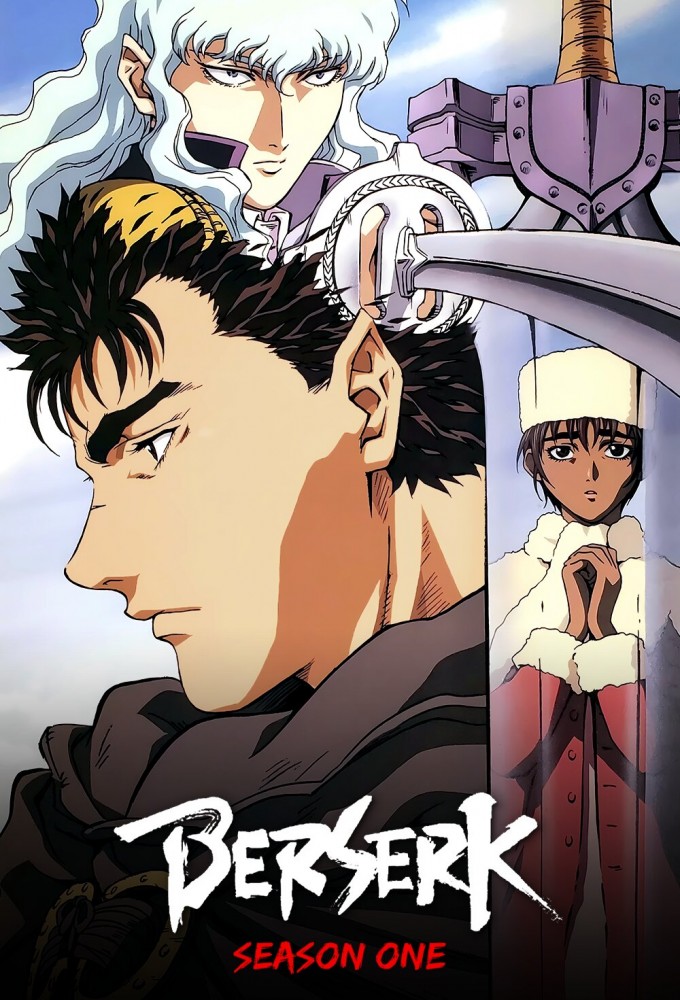

Why Watch
"Witness an uncompromising dark fantasy epic detailing ambition, brotherhood, and a catastrophic descent into terrifying cosmic horror."
AI Critic Analysis
Series Deep Dive:
A benchmark of Japanese animation, Berserk adapts Kentaro Miura's legendary Golden Age arc with staggering emotional weight. The narrative tracks Guts, a lethal mercenary whose fate entwines with Griffith's charismatic Band of the Hawk. Bolstered by Susumu Hirasawa's haunting score, this adaptation avoids modern stylistic sanitization, delivering an unflinching study of ambition, trauma, and betrayal that remains unmatched in the dark fantasy canon.
Season: 1
| Watched? | # | Air Date | Episode Name |
|---|---|---|---|
| E1 | Oct 08, 1997 | 黒い騎士 | |
| E2 | Oct 15, 1997 | 鷹の団 | |
| E3 | Oct 22, 1997 | 初陣 | |
| E4 | Oct 29, 1997 | 神の手 | |
| E5 | Nov 05, 1997 | 剣風 | |
| E6 | Nov 12, 1997 | 不死のゾッド | |
| E7 | Nov 19, 1997 | 剣の主 | |
| E8 | Nov 26, 1997 | 陰謀 | |
| E9 | Dec 03, 1997 | 暗殺 | |
| E10 | Dec 10, 1997 | 貴きもの | |
| E11 | Dec 17, 1997 | 合戦 | |
| E12 | Dec 24, 1997 | ふたり | |
| E13 | Jan 07, 1998 | 決死行 | |
| E14 | Jan 14, 1998 | 夢のかがり火 | |
| E15 | Jan 21, 1998 | 決戦 | |
| E16 | Jan 28, 1998 | 勝利者 | |
| E17 | Feb 04, 1998 | 栄光の瞬間 | |
| E18 | Feb 11, 1998 | 炎の墓標 | |
| E19 | Feb 18, 1998 | 別れ | |
| E20 | Feb 25, 1998 | 火花 | |
| E21 | Mar 04, 1998 | 告白 | |
| E22 | Mar 11, 1998 | 潜入 | |
| E23 | Mar 18, 1998 | 前夜祭 | |
| E24 | Mar 25, 1998 | 蝕 | |
| E25 | Apr 01, 1998 | 永遠の刻 |
Series Legacy & Historical Archive
Franchise Status: Legacy Series (Completed Original Run)
Berserk remains a definitive pillar of dark fantasy television, having concluded its influential run on Nippon TV. This 1997 adaptation of Kentaro Miura's magnum opus redefined the boundaries of adult animation by blending visceral medieval warfare with deep philosophical inquiry. By focusing on the Golden Age arc, the series established a blueprint for the tragic anti-hero through the journey of Guts, while simultaneously crafting one of the most complex antagonists in fiction with Griffith. Its impact is visible today across various media, directly influencing the aesthetic and thematic core of massive gaming franchises and modern dark fantasy literature.
The series remains a mandatory rewatch for fans because of its masterful character work and the haunting atmosphere created by its unique soundtrack and hand-drawn art style. Unlike many of its contemporaries, the show prioritizes the internal psychological state of its mercenaries, making the inevitable descent into supernatural horror feel earned and deeply personal. It explores the heavy themes of causality and human willpower with a maturity that few series have matched since. This enduring relevance ensures that the original television run continues to be celebrated as a high-water mark for storytelling that refuses to shy away from the darkness of the human condition.
If you liked Berserk:




Technical Details
- Network: Nippon TV
- Seasons: 1
- Years: 1997 - 1998
- Genre: Action, Adventure, Animation, Anime, Drama, Fantasy, Horror, Romance
- Rating: TV-MA