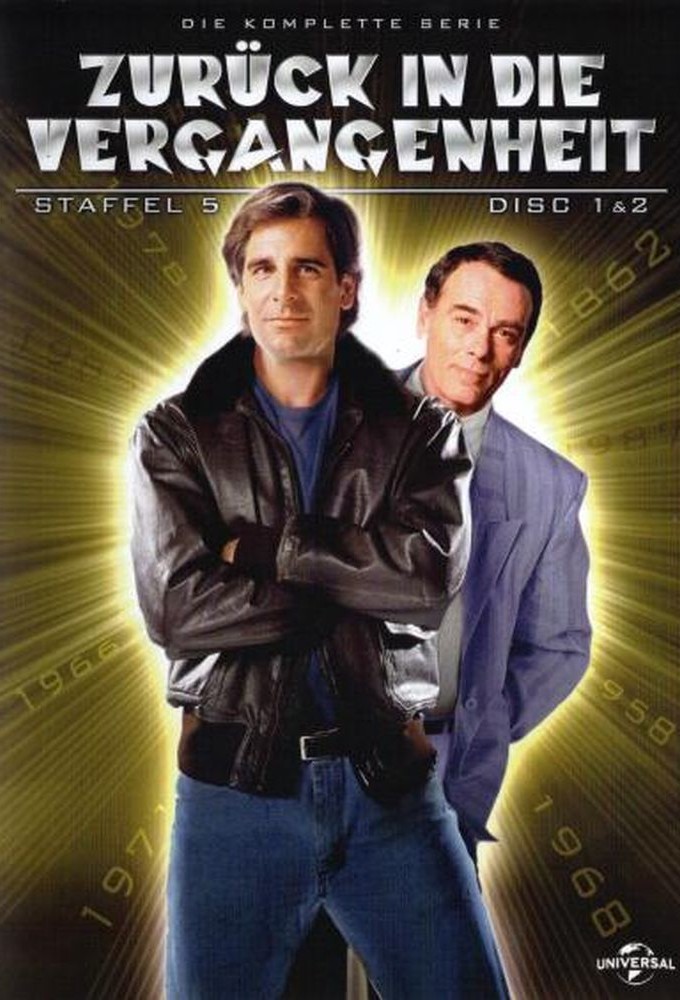

Why Watch
"Experience the poignant conclusion of television's ultimate time-travel journey as Dr. Sam Beckett strives to return home."






AI Critic Analysis
Series Deep Dive:
Season 5 delivers the emotional culmination of Quantum Leap, pushing Dr. Sam Beckett into pivotal historical moments alongside his loyal hologram companion, Al. Balancing heartfelt anthology storytelling with high-stakes temporal mechanics, this final outing sharpens its focus on fate and personal sacrifice. Concluding on an unforgettable and melancholic note, the groundbreaking NBC classic secures its status as an enduring masterclass in episodic speculative fiction.
Season: 5
| Watched? | # | Air Date | Episode Name |
|---|---|---|---|
| E1 | Sep 22, 1992 | Lee Harvey Oswald (1) | |
| E2 | Sep 22, 1992 | Lee Harvey Oswald (2) | |
| E3 | Sep 29, 1992 | Leaping of the Shrew | |
| E4 | Oct 06, 1992 | Nowhere to Run | |
| E5 | Oct 20, 1992 | Killin' Time | |
| E6 | Oct 27, 1992 | Star Light, Star Bright | |
| E7 | Nov 10, 1992 | Deliver Us from Evil | |
| E8 | Nov 17, 1992 | Trilogy (1): One Little Heart | |
| E9 | Nov 24, 1992 | Trilogy (2): For Your Love | |
| E10 | Nov 24, 1992 | Trilogy (3): The Last Door | |
| E11 | Dec 15, 1992 | Promised Land | |
| E12 | Jan 05, 1993 | A Tale of Two Sweeties | |
| E13 | Jan 12, 1993 | Liberation | |
| E14 | Jan 19, 1993 | Dr. Ruth | |
| E15 | Feb 09, 1993 | Blood Moon | |
| E16 | Feb 23, 1993 | Return of the Evil Leaper | |
| E17 | Feb 23, 1993 | Revenge of the Evil Leaper | |
| E18 | Mar 02, 1993 | Goodbye Norma Jean | |
| E19 | Mar 16, 1993 | The Beast Within | |
| E20 | Mar 30, 1993 | The Leap Between the States | |
| E21 | Apr 20, 1993 | Memphis Melody | |
| E22 | May 05, 1993 | Mirror Image |
Series Legacy & Historical Archive
Franchise Status: Active
Quantum Leap remains a definitive pillar of science fiction television, having concluded its influential run on NBC. The series redefined the genre by blending high-concept temporal mechanics with a deeply humanistic approach to storytelling. By centering Sam Beckett as a moral compass navigating diverse historical and social landscapes, the show transcended standard procedural tropes. It tackled sensitive themes of race, gender, and class with a level of empathy that was rare for its time, cementing its place as a pioneer of the social-issue drama hidden within a sci-fi shell.
Decades after Sam first stepped into the accelerator, the series endures as a rewatch staple because of the indelible chemistry between Scott Bakula and Dean Stockwell. The dynamic between the scientist and his holographic observer provided the emotional anchor necessary to ground the fantastical premise of body-swapping through time. Its message of universal compassion and the idea that one person can change the world for the better continues to resonate with modern audiences, ensuring its legacy remains vibrant through reboots and persistent syndication.
If you liked Quantum Leap:






Technical Details
- Network: NBC
- Seasons: 5
- Years: 1989 - 1993
- Genre: Action, Adventure, Drama, Mystery, Science Fiction
- Rating: TV-14