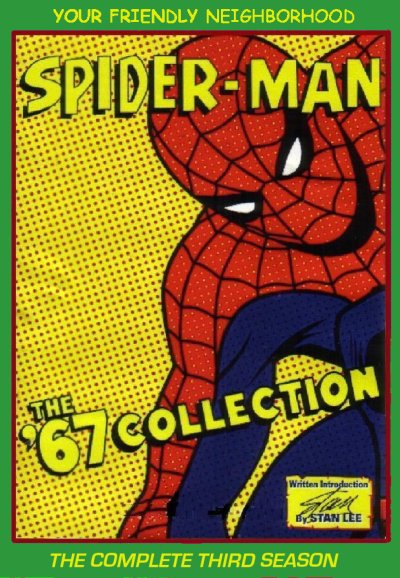

Why Watch
"Relive the legendary 1960s web-slinger whose iconic jazz soundtrack and vibrant animation defined Marvel's screen history."
AI Critic Analysis
Series Deep Dive:
As the final chapter of Ralph Bakshi's psychedelic run, Spider-Man Season 3 pushed animation boundaries with thrift and surreal imagination. Relying on stock footage and atmospheric, budget-driven collages, these episodes solidified Peter Parker's television legacy. For animation historians and comic purists, this concluding broadcast run remains an essential, nostalgic milestone that captured a distinct countercultural energy rarely seen in classic Saturday morning cartoons.
Season: 3
| Watched? | # | Air Date | Episode Name |
|---|---|---|---|
| E1 | Mar 22, 1970 | The Winged Thing | |
| E2 | Mar 22, 1970 | Conner's Reptiles | |
| E3 | Mar 29, 1970 | Trouble with Snow | |
| E4 | Mar 29, 1970 | Spider-Man vs. Desperado | |
| E5 | Apr 05, 1970 | Sky Harbor | |
| E6 | Apr 05, 1970 | The Big Brainwasher | |
| E7 | Apr 12, 1970 | The Vanishing Doctor Vespasian | |
| E8 | Apr 12, 1970 | The Scourge of the Scarf | |
| E9 | Apr 19, 1970 | Super Swami | |
| E10 | Apr 19, 1970 | The Birth of Micro Man | |
| E11 | Apr 26, 1970 | Knight Must Fall | |
| E12 | Apr 26, 1970 | The Devious Dr. Dumpty | |
| E13 | May 03, 1970 | Up from Nowhere | |
| E14 | May 10, 1970 | Rollarama | |
| E15 | May 17, 1970 | Rhino | |
| E16 | May 17, 1970 | The Madness of Mysterio | |
| E17 | May 24, 1970 | Revolt in the Fifth Dimension | |
| E18 | May 31, 1970 | Specialists and Slaves | |
| E19 | Jun 07, 1970 | Down to Earth | |
| E20 | Jun 14, 1970 | Trip to Tomorrow |
Series Legacy & Historical Archive
Franchise Status: Legacy / Concluded
Spider-Man remains a definitive pillar of animated superhero television, having concluded its influential run on ABC. This 1967 series established the foundational visual and musical language for the wall-crawler that persists in the public consciousness decades later. Beyond its role as the first major animated adaptation of Stan Lee and Steve Ditko's creation, the show introduced the iconic theme song that has become synonymous with the character's identity. Its blend of psychedelic sixties art styles and urban grit provided a unique aesthetic that bridged the gap between comic book panels and the television screen, cementing Peter Parker's dual life as a relatable template for future protagonist arcs.
Today, the series functions as a significant rewatch staple due to its heavy presence in internet culture and its nostalgic charm. While produced under budget constraints that led to recycled animation, those very quirks have fueled a secondary life for the show through memes and digital tributes, keeping it relevant for younger generations. It serves as a time capsule of a specific era in animation history, offering a direct link to the silver age of comics while maintaining a level of campy fun that newer, more serious iterations often lack. For fans of the franchise, returning to these episodes offers a grounding perspective on the humble beginnings of a global cinematic titan.
If you liked Spider-Man:




Technical Details
- Network: ABC (US)
- Seasons: 3
- Years: 1967 - 1970
- Genre: Action, Adventure, Animation, Children, Family, Fantasy, Science Fiction
- Rating: TV-Y7