
Why Watch
"Experience Studio Trigger's breakthrough masterpiece of relentless kinetic action, absurd comedy, and razor-sharp satire on fascist uniformity."





AI Critic Analysis
Series Deep Dive:
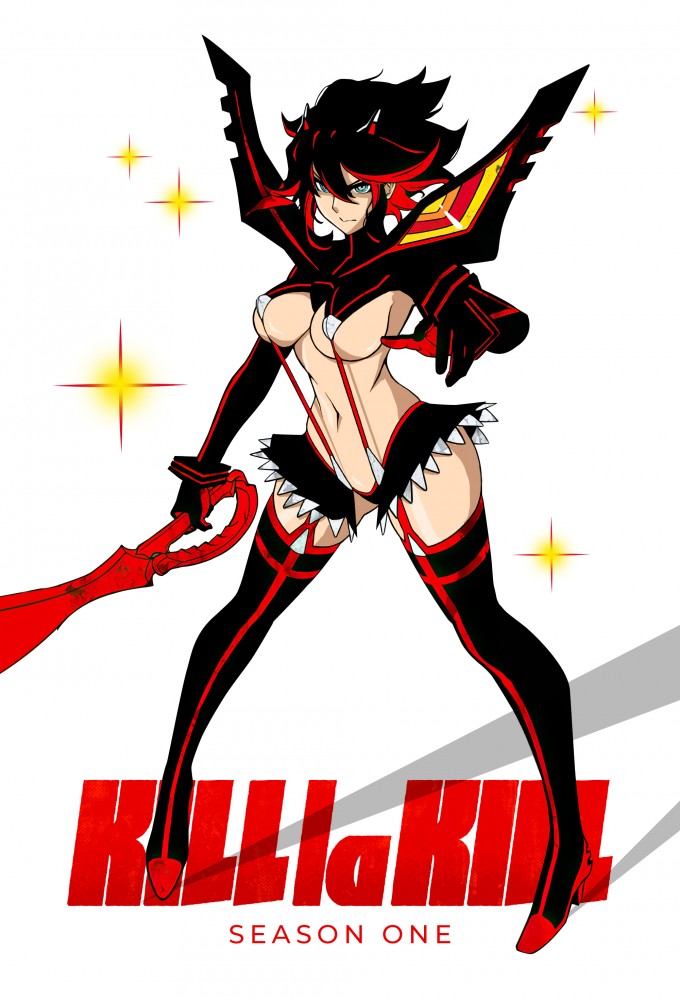
Directed by Hiroyuki Imaishi, Kill la Kill remains a defining monument of modern anime. The series elevates revenge tropes into a ferocious, high-octane spectacle driven by Ryuko Matoi's scissor-blade quest. Pairing boundary-pushing animation with sharp sociological commentary, MBS broadcast an unabashedly chaotic epic that never compromises its momentum. Its finished story delivers a complete, explosive run that endures as an essential classic for action enthusiasts worldwide.
Season: 1
| Watched? | # | Air Date | Episode Name |
|---|---|---|---|
| E1 | Oct 04, 2013 | あざみのごとく棘あれば | |
| E2 | Oct 11, 2013 | 気絶するほど悩ましい | |
| E3 | Oct 18, 2013 | 純潔 | |
| E4 | Oct 25, 2013 | とても不幸な朝が来た | |
| E5 | Nov 01, 2013 | 銃爪(ヒキガネ) | |
| E6 | Nov 08, 2013 | 気分次第で責めないで | |
| E7 | Nov 15, 2013 | 憎みきれないろくでなし | |
| E8 | Nov 22, 2013 | 俺の涙は俺が拭く | |
| E9 | Nov 29, 2013 | チャンスは一度 | |
| E10 | Dec 06, 2013 | あなたを・もっと・知りたくて | |
| E11 | Dec 13, 2013 | 可愛い女と呼ばないで | |
| E12 | Dec 20, 2013 | 悲しみにつばをかけろ | |
| E13 | Jan 10, 2014 | 君に薔薇薔薇…という感じ | |
| E14 | Jan 17, 2014 | 急げ風のように | |
| E15 | Jan 24, 2014 | どうにもとまらない | |
| E16 | Jan 31, 2014 | 女はそれを我慢できない | |
| E17 | Feb 07, 2014 | 何故にお前は | |
| E18 | Feb 14, 2014 | 夜へ急ぐ人 | |
| E19 | Feb 21, 2014 | たどりついたらいつも雨ふり | |
| E20 | Feb 28, 2014 | とおく群衆を離れて | |
| E21 | Mar 07, 2014 | 未完成 | |
| E22 | Mar 14, 2014 | 唇よ、熱く君を語れ | |
| E23 | Mar 21, 2014 | イミテイション・ゴールド | |
| E24 | Mar 28, 2014 | 果てしなき闇の彼方に |
Series Legacy & Historical Archive
Franchise Status: Concluded / Legacy
Kill la Kill remains a definitive pillar of action-fantasy television, having concluded its influential run on MBS. As the debut production from Studio Trigger, the series redefined the boundaries of visual kineticism and narrative absurdity, blending high-octane combat with a satirical deconstruction of magical girl tropes and clothing-based social hierarchies. Its legacy is rooted in its unapologetic maximalism, where the animation style itself mirrors the chaotic emotional state of its protagonist, Ryuko Matoi. By prioritizing expressive movement and stylistic flair over traditional anatomical consistency, the show carved out a unique niche that continues to influence modern animation trends and character design philosophies across the global industry.
The enduring appeal of the series as a rewatch staple lies in its dense layering of thematic depth beneath a veneer of over-the-top action and visual spectacle. Fans return to the Honnouji Academy battlefield to rediscover the intricate metaphors for adolescence, societal conformity, and the reclamation of personal identity through the metaphor of life fibers. Its soundtrack, composed by Hiroyuki Sawano, provides an operatic scale that elevates every confrontation into a mythic event, ensuring the emotional beats land with as much force as the physical strikes. Even years after its finale, the show maintains a vibrant presence in cosplay culture and critical discourse, standing as a testament to the power of original storytelling in an era often dominated by franchise adaptations.
If you liked Kill la Kill:




Trailer
Technical Details
- Network: MBS
- Seasons: 1
- Years: 2013 - 2014
- Genre: Action, Animation, Anime, Comedy, Drama, Fantasy, Science Fiction
- Rating: TV-MA